







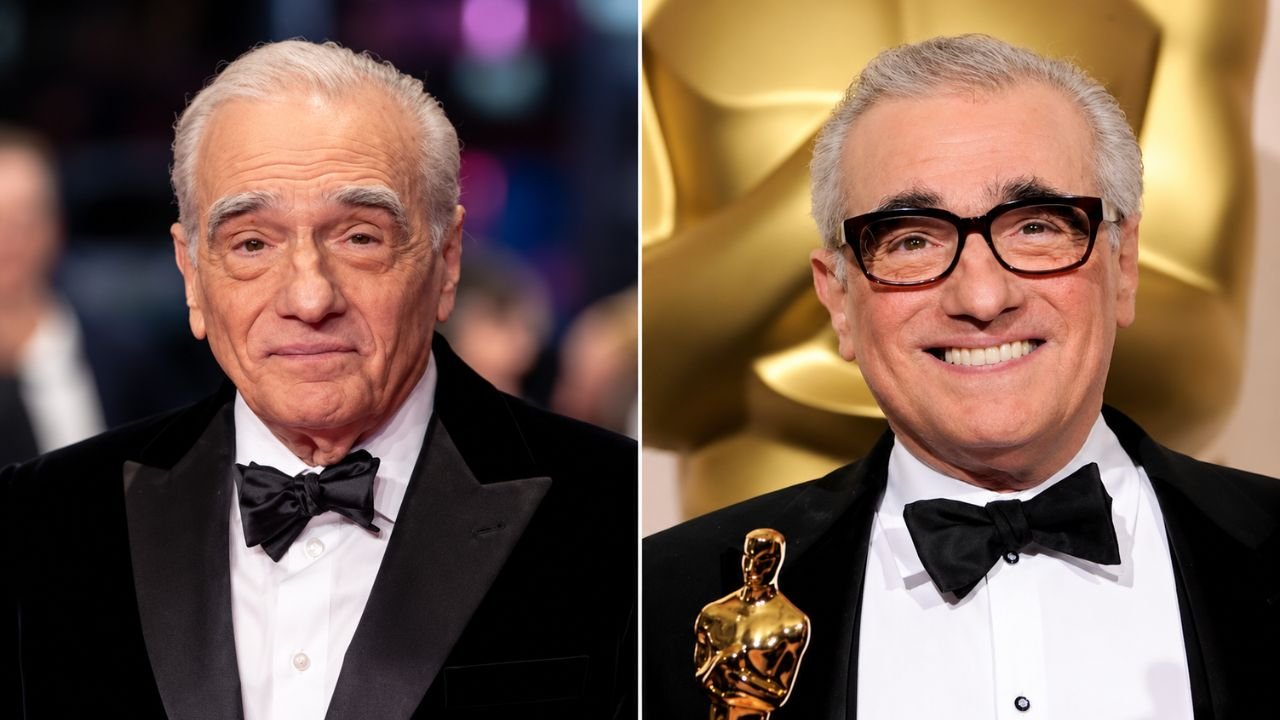
Martin Scorsese is one of the most recognizable names in American filmmaking, with a career that has stretched across more than five decades. Born on November 17, 1942, in Queens, New York City, he grew up in Manhattan’s Little Italy in an Italian-American family with roots in Palermo, Sicily. His childhood surroundings, Catholic upbringing and early fascination with movies later became important influences on his storytelling. From Taxi Driver and Raging Bull to Goodfellas, The Departed, The Irishman and Killers of the Flower Moon, Martin Scorsese has built a filmography that covers crime, history, religion, music, family, ambition and human conflict.
Martin Scorsese Age and Early Life
Martin Scorsese was born Martin Charles Scorsese on November 17, 1942, making him 83 years old as of September 2026. He was raised in Little Italy, where the streets, families and neighborhood culture gave him an intimate understanding of New York life. His parents, Catherine and Charles Scorsese, came from families with Sicilian roots, and both worked in Manhattan’s garment district. That close connection to family, community and Italian-American culture would eventually become one of the strongest threads running through his movies.
Scorsese was not an especially active child because he suffered from asthma, which limited many of the physical activities he could take part in. Movies became an important part of his childhood, and his parents frequently took him to theaters. He became fascinated by the way films could create different worlds and communicate emotions without relying on ordinary conversation. Long before he became a professional director, cinema had already become a major part of how he understood the world around him.
His mother and father also had connections to acting, which gave Scorsese an early familiarity with performance and filmmaking. His mother later appeared in several of his movies, sometimes playing small but memorable roles. Family members and familiar neighborhood personalities also influenced the characters and atmosphere of his early work. These experiences helped him develop a filmmaking style that often feels closely connected to real communities rather than distant fictional settings.
Martin Scorsese and His Catholic Upbringing
Religion played an important role in Scorsese’s childhood and later became a recurring subject in his filmmaking. He was raised as a Roman Catholic and spent part of his youth considering a religious career. At one point, he attended a preparatory seminary because he was interested in becoming a priest, although he eventually left that path.
The influence of Catholicism remained visible throughout his career. Questions about guilt, forgiveness, temptation, sacrifice, morality and redemption appear in many of his movies. Films such as The Last Temptation of Christ and Silence deal directly with faith, while religious ideas also appear more subtly in movies centered on crime and personal guilt. His religious background therefore became more than a childhood detail and developed into an important part of his artistic identity.
Martin Scorsese Education and Early Filmmaking
Scorsese eventually attended New York University, where he studied film and developed his skills as a director and storyteller. During his university years, he made short films and became increasingly interested in the technical and creative possibilities of cinema. One of his best-known early short films was The Big Shave, which demonstrated his interest in visual symbolism and unsettling imagery.
His university years also exposed him to a wide range of American and international movies. Scorsese became particularly interested in filmmakers from different countries and different periods of film history. Those influences later helped him develop a style that combined classic filmmaking techniques with the energy of contemporary New York. His education was therefore not limited to classroom instruction because much of his development came from constantly watching and studying movies.
Scorsese made his first feature film, Who’s That Knocking at My Door, during the late 1960s. The movie introduced several themes that would remain important throughout his career, including Catholicism, relationships, masculinity and urban life. Although it did not immediately turn him into a major Hollywood director, it gave him a professional starting point. His early work showed that he had a distinctive perspective and a willingness to tell stories that were more personal than conventional studio productions.
Mean Streets and Martin Scorsese’s Breakthrough
Mean Streets, released in 1973, became an important turning point in Martin Scorsese’s career. The movie focused on young men living in New York and dealt with crime, loyalty, religion, friendship and personal responsibility. It also captured the atmosphere of Little Italy in a way that felt personal because Scorsese had grown up in that environment.
The film introduced audiences to a filmmaking style that would become strongly associated with Scorsese. He combined energetic camera movement, carefully selected music, fast editing and morally complicated characters. Mean Streets also began his long creative relationship with Robert De Niro, who would become one of the most important actors in his career. The movie helped establish Scorsese as a director with a recognizable voice.
The success and reputation of Mean Streets opened the door to larger projects. Scorsese soon moved from independent-style filmmaking into major productions while maintaining many of the personal themes that had shaped his earliest work. His next films would establish him as one of the most important American directors of his generation.
Taxi Driver and the Rise of a Major Director
Taxi Driver arrived in 1976 and became one of the defining movies of Scorsese’s early career. Robert De Niro played Travis Bickle, a lonely New York taxi driver whose increasingly disturbed view of society leads him toward violence. The film explored isolation, alienation and the darker side of urban life.
The movie was written by Paul Schrader and featured Jodie Foster, Cybill Shepherd, Harvey Keitel and Albert Brooks alongside De Niro. Its combination of psychological tension, memorable music and distinctive visual style made it a major part of American cinema. Taxi Driver also won the Palme d’Or at the Cannes Film Festival.
The film demonstrated how Scorsese could take a relatively intimate character study and turn it into a larger examination of society. New York itself became an important part of the storytelling. The city in Taxi Driver is not simply a location but an environment that shapes the main character’s experiences and decisions.
Raging Bull and a Defining Career Achievement
Raging Bull was released in 1980 and featured Robert De Niro as boxer Jake LaMotta. The movie was based on LaMotta’s memoir and examined his professional career, relationships and increasingly destructive behavior. Rather than presenting boxing as a simple story of victory, Scorsese focused heavily on the character’s personal struggles.
The movie became famous for its striking black-and-white photography, editing and performances. Robert De Niro won the Academy Award for Best Actor for his portrayal of LaMotta. Raging Bull received multiple Academy Award nominations, including Best Picture and Best Director.
For Martin Scorsese, the movie represented another step toward becoming one of the most respected directors in American cinema. Its success also showed that he could create intense character-driven stories without depending entirely on conventional action. The film remains an important part of discussions about his greatest movies.
Martin Scorsese and Robert De Niro
The professional relationship between Martin Scorsese and Robert De Niro is one of the most recognizable director-actor partnerships in modern cinema. Their collaboration began with Mean Streets and continued across several decades. Together, they created some of the most memorable characters in Scorsese’s filmography.
Their major collaborations include:
- Mean Streets
- Taxi Driver
- New York, New York
- Raging Bull
- The King of Comedy
- Goodfellas
- Cape Fear
- Casino
- The Irishman
The partnership worked across different types of stories rather than remaining limited to one genre. De Niro played a boxer, taxi driver, comedian, gangster, businessman and many other kinds of characters under Scorsese’s direction. Their most recent major collaboration was The Irishman, where De Niro starred alongside Al Pacino and Joe Pesci.
Goodfellas, Casino and the Crime Films
Goodfellas, released in 1990, became one of Martin Scorsese’s most famous movies. Based on Nicholas Pileggi’s book Wiseguy, the film followed Henry Hill and his involvement with organized crime. Ray Liotta played Hill, while Robert De Niro and Joe Pesci were among the major supporting actors.
The movie became known for its fast editing, narration, music and detailed depiction of criminal life. Rather than presenting organized crime as glamorous, the story gradually shows the consequences of violence, addiction, paranoia and betrayal. Goodfellas also became one of the films most closely associated with Scorsese’s distinctive visual style.
Scorsese returned to organized crime with Casino in 1995. Starring Robert De Niro, Sharon Stone and Joe Pesci, the film explored the relationship between organized crime and the casino business in Las Vegas. Together, Goodfellas and Casino demonstrated how Scorsese could use crime stories to examine ambition, loyalty, greed and personal destruction.
Martin Scorsese’s Movies Beyond Crime
Although crime movies are a major part of Martin Scorsese’s reputation, his filmography extends far beyond gangster stories. He has worked with historical dramas, religious films, psychological thrillers, biographical stories, children’s adventures, music documentaries and literary adaptations.
Some notable Martin Scorsese movies include:
- Alice Doesn’t Live Here Anymore
- Taxi Driver
- Raging Bull
- The King of Comedy
- The Last Temptation of Christ
- Goodfellas
- The Age of Innocence
- Casino
- Gangs of New York
- The Aviator
- The Departed
- Shutter Island
- Hugo
- The Wolf of Wall Street
- Silence
- The Irishman
- Killers of the Flower Moon
This range is important when looking at his career as a whole. The stories may look very different from one another, but many explore similar ideas involving identity, ambition, morality, violence, faith and the consequences of personal choices.
Martin Scorsese and Leonardo DiCaprio
Leonardo DiCaprio became another major collaborator in Martin Scorsese’s career. Their professional relationship began with Gangs of New York in 2002 and continued through The Aviator, The Departed, Shutter Island and The Wolf of Wall Street.
Their collaboration expanded further with Killers of the Flower Moon, which reunited DiCaprio with both Scorsese and Robert De Niro. The movie was set in 1920s Oklahoma and examined the murders of members of the Osage Nation after oil wealth was discovered on their land.
The partnership between Scorsese and DiCaprio has covered several different genres and historical periods. DiCaprio has played an ambitious young man, a troubled businessman, a law enforcement figure and a character caught in a violent historical conflict under Scorsese’s direction. Their continued collaboration has become one of the major actor-director relationships in contemporary American cinema.
The Departed and Martin Scorsese’s Oscar Win
The Departed was released in 2006 and became a major milestone in Martin Scorsese’s career. The crime thriller starred Leonardo DiCaprio, Matt Damon, Jack Nicholson, Mark Wahlberg and Martin Sheen. The story followed an undercover police officer and a criminal working inside law enforcement, creating a tense conflict between two sides.
The film won the Academy Award for Best Picture and earned Scorsese the Oscar for Best Director. After several previous nominations, the award became the first Academy Award win of his directing career. The recognition marked a significant moment for a filmmaker who had already spent decades producing influential work.
The Departed also showed that Scorsese could work successfully within a major studio crime thriller while retaining his characteristic attention to character and moral conflict. Its success added another important chapter to his long relationship with crime stories.
The Aviator, Hugo and The Wolf of Wall Street
Scorsese’s career in the 2000s and 2010s continued to move between different subjects. The Aviator explored the life of Howard Hughes and starred Leonardo DiCaprio in the central role. The film combined biography, aviation history and Hollywood drama while receiving multiple Academy Award nominations.
Hugo represented another significant change in style. Released in 2011, the movie followed a young orphan living in a Paris train station and explored the history of early cinema. The film was particularly meaningful because it allowed Scorsese to combine storytelling for younger audiences with his long-standing interest in preserving film history.
The Wolf of Wall Street arrived in 2013 and reunited Scorsese with Leonardo DiCaprio. Based on the life of stockbroker Jordan Belfort, the movie examined wealth, excess, fraud and ambition. Its fast pace, dark humor and energetic performances became major features of Scorsese’s later filmmaking style.
Silence and Scorsese’s Interest in Faith
Silence was released in 2016 and was based on Shusaku Endo’s novel. The story followed Jesuit priests who traveled to Japan while facing persecution and uncertainty over the survival of Christianity in the country. Andrew Garfield, Adam Driver and Liam Neeson led the cast.
The film connected strongly with Scorsese’s long-standing interest in Catholicism and questions about faith. It explored what happens when people are forced to choose between their beliefs, survival and the welfare of others. The movie also reflected an aspect of Scorsese’s filmmaking that is sometimes overlooked because of his crime dramas.
Silence demonstrates that religion has remained a serious subject throughout his career. His interest in faith began during childhood but continued to evolve as he became a filmmaker and explored moral questions through different characters and historical settings.
The Irishman and a Reunion With Robert De Niro
The Irishman arrived in 2019 and brought Martin Scorsese back together with Robert De Niro. The film also starred Al Pacino and Joe Pesci, creating a major gathering of actors associated with American crime cinema. It was based on the book I Heard You Paint Houses by Charles Brandt.
The story followed Frank Sheeran and his involvement with organized crime and labor leader Jimmy Hoffa. Unlike some of Scorsese’s earlier crime films, The Irishman focused heavily on aging, memory, loyalty and regret. Its long running time allowed the story to examine the characters over several decades.
The movie received multiple Academy Award nominations, including Best Picture and Best Director. It also became an important example of Scorsese’s ability to work with streaming platforms while maintaining the scale and ambition of a major feature film.
Killers of the Flower Moon
Killers of the Flower Moon became Martin Scorsese’s most recent major feature film. Released in 2023, it was based on David Grann’s nonfiction book about the murders of wealthy Osage people in Oklahoma during the 1920s.
Leonardo DiCaprio and Robert De Niro played major roles, while Lily Gladstone portrayed Mollie Burkhart. The film premiered at the Cannes Film Festival and received 10 Academy Award nominations. It also continued Scorsese’s interest in examining American history through complicated relationships between individuals, communities and institutions.
The movie was notable not only because of its cast but also because of its historical subject. Scorsese used the story to explore greed, exploitation, marriage, family and the consequences of violence. It became another example of his move beyond traditional gangster stories into broader examinations of American history.
Martin Scorsese as a Documentary Filmmaker
Martin Scorsese’s work is not limited to fictional feature films. He has directed and produced numerous documentaries covering music, cinema, writers, performers and cultural history. His documentary work includes projects such as No Direction Home: Bob Dylan and George Harrison: Living in the Material World.
He also directed Pretend It’s a City, a documentary series centered on New York writer and commentator Fran Lebowitz. The project allowed Scorsese to explore his connection with New York through another person’s observations of the city. His long familiarity with New York gives these projects a personal quality.
Documentary filmmaking also gives Scorsese an opportunity to preserve stories that might otherwise disappear from public memory. His interest in cinema history is particularly strong, and that interest eventually led to one of his most important contributions outside directing.
The Film Foundation and Preserving Cinema History
Martin Scorsese founded The Film Foundation in 1990 with other major figures from the film industry. The organization focuses on preserving and restoring films that might otherwise be damaged or lost. Scorsese has remained closely involved with the foundation and serves as its chair.
His preservation work reflects his belief that older films are an important part of cultural history. He has supported restoration efforts involving American movies as well as films from other countries. His work in preservation has also helped introduce audiences to cinema that might otherwise be difficult to access.
The Film Foundation represents a different side of Scorsese’s career. Instead of creating new movies, he has devoted substantial time to protecting the movies made by earlier generations. His involvement has made film preservation an important part of his public work.
Martin Scorsese Wife and Family
Martin Scorsese has been married five times. His wives have included Laraine Brennan, Julia Cameron, Isabella Rossellini, Barbara De Fina and Helen Morris. His current marriage to Helen Morris began in 1999, and the couple has a daughter, Francesca.
Scorsese has three daughters: Cathy Scorsese, Domenica Cameron-Scorsese and Francesca Scorsese. His children have also had connections to the entertainment industry, with Domenica working as an actress and filmmaker and Francesca becoming involved in acting and filmmaking.
Family has remained an important part of Scorsese’s personal and professional world. His mother appeared in several of his films, while his daughters have also appeared in or worked on entertainment projects. This connection between family and filmmaking is one of the recurring personal elements surrounding his career.
Mr. Scorsese Documentary
The documentary series Mr. Scorsese provides a closer look at the filmmaker’s life and career. The project was directed by Rebecca Miller and developed into a multi-part documentary after years of work. It includes conversations and reflections involving people who have worked with or known Scorsese.
The documentary features figures connected to different periods of his career, including Robert De Niro, Leonardo DiCaprio, Steven Spielberg and other major names from the film industry. It also examines his personal history and creative development. For audiences interested in Martin Scorsese beyond his movie credits, the project offers another way to understand his career.
The documentary is particularly relevant because Scorsese’s career spans several generations of Hollywood. Many of the actors, directors and collaborators who appear in the project were part of major moments in American cinema. Their experiences help put his work into a broader historical context.
What Happens at Night and Martin Scorsese’s Current Work
Martin Scorsese continues to work on new projects at the age of 83. One of his major current projects is What Happens at Night, a film based on Peter Cameron’s novel. Leonardo DiCaprio and Jennifer Lawrence are attached to the project, with Scorsese serving as director and producer.
The story follows an American couple who travel to a snowy European location to adopt a baby. Their experience becomes increasingly strange as the story develops. The project represents another move into psychological and mysterious territory for Scorsese.
Current industry listings place What Happens at Night in post-production. The film is particularly notable because it represents another collaboration between Scorsese and DiCaprio, while also bringing Jennifer Lawrence into his filmography. Its release details can change as the production moves forward.
Other Martin Scorsese Projects
Scorsese’s current professional work extends beyond What Happens at Night. Industry listings have connected him with several projects in different stages of development, production and post-production. These projects demonstrate that his role in modern filmmaking involves directing, producing and supporting other filmmakers.
Projects associated with his current slate include:
- The Wager: A Tale of Shipwreck, Mutiny, and Murder
- Roosevelt
- The Memory Police
- The Roman
- Tyson
- Untitled Hawaii-Set Crime Drama
- Shipwrecks of Sicily
- Home
Not every project on a development list is guaranteed to become a completed film or television series. Some productions can change directors, schedules, financing or creative direction before release. For that reason, current project information is best treated as a snapshot of his professional activity rather than a fixed release schedule.
Martin Scorsese’s Filmmaking Style
Martin Scorsese has developed a recognizable filmmaking style over several decades. His movies often use music as an important storytelling device, while his camera movement and editing can create a strong sense of energy. He is also known for long tracking shots, slow motion and scenes that place viewers directly inside a character’s experience.
Several characteristics are frequently associated with his work:
- Strong use of music and carefully selected soundtracks
- Long and fluid camera movements
- Fast and expressive editing
- Characters facing moral or personal conflict
- Stories involving guilt, ambition and violence
- Strong connections to New York
- Themes involving faith and redemption
- Interest in American history and culture
His style has evolved over time rather than remaining exactly the same. Taxi Driver looks very different from Hugo, while The Irishman has a different rhythm from Goodfellas. Despite those differences, his attention to character, music, visual storytelling and moral complexity continues to connect his films.
Martin Scorsese Career Timeline
Martin Scorsese’s career can be summarized through several major milestones:
- 1942: Born in Queens, New York City.
- 1960s: Studied film at New York University and made early short films.
- 1967: Directed Who’s That Knocking at My Door.
- 1973: Released Mean Streets.
- 1976: Directed Taxi Driver.
- 1980: Released Raging Bull.
- 1990: Directed Goodfellas.
- 2002: Began his major film collaboration with Leonardo DiCaprio through Gangs of New York.
- 2004: Directed The Aviator.
- 2006: Directed The Departed.
- 2007: Won the Academy Award for Best Director.
- 2011: Directed Hugo.
- 2013: Directed The Wolf of Wall Street.
- 2016: Released Silence.
- 2019: Directed The Irishman.
- 2023: Released Killers of the Flower Moon.
- 2026: Continues working on What Happens at Night and other film and television projects.
Martin Scorsese Net Worth and Career Earnings
Martin Scorsese’s long career as a director, producer and filmmaker has generated substantial professional earnings. However, there is no reliable public financial statement that establishes an exact figure for Martin Scorsese net worth. Celebrity websites often publish estimates, but these numbers can differ considerably and are not the same as verified financial records.
His income has come from many parts of the entertainment business rather than directing alone. Film directing, producing, executive producing, television projects and other professional activities have all contributed to his career. His long list of successful films and continuing production work also means that his professional value extends well beyond individual movie salaries.
For that reason, any specific net worth figure should be treated as an estimate rather than a confirmed fact. What can be established is that Scorsese has maintained a highly successful career spanning more than 50 years and continues to work on major productions.
Frequently Asked Questions About Martin Scorsese
Who is Martin Scorsese?
Martin Scorsese is an American filmmaker, director and producer known for movies including Taxi Driver, Raging Bull, Goodfellas, The Departed, The Irishman and Killers of the Flower Moon. His career began in the 1960s and has continued across several generations of cinema.
How old is Martin Scorsese?
Martin Scorsese was born on November 17, 1942. He is 83 years old as of September 2026.
Who is Martin Scorsese’s wife?
Martin Scorsese is married to Helen Morris. They married in 1999 and have a daughter named Francesca Scorsese.
How many Oscars has Martin Scorsese won?
Martin Scorsese has won one Academy Award for Best Director. He received the award for The Departed at the 2007 Academy Awards.
What is Martin Scorsese’s next movie?
What Happens at Night is one of Martin Scorsese’s major current projects. The film stars Leonardo DiCaprio and Jennifer Lawrence and is based on Peter Cameron’s novel. Current industry listings place the movie in post-production as of September 2026.
Conclusion
Martin Scorsese’s career is much broader than the crime films for which he is often best known. His work has covered religion, American history, music, family, ambition, organized crime, cinema history and personal identity. From his childhood in Little Italy to his education at New York University and his breakthrough with Mean Streets, each stage of his life contributed to the filmmaking style that later became internationally recognized.
His collaborations with Robert De Niro and Leonardo DiCaprio produced some of the most recognizable movies of his career, while The Departed finally brought him the Academy Award for Best Director. At the same time, his documentary work and involvement with The Film Foundation show that his contribution to cinema extends beyond directing new movies. In 2026, Martin Scorsese remains active as a filmmaker and producer, with What Happens at Night among his major current projects.