






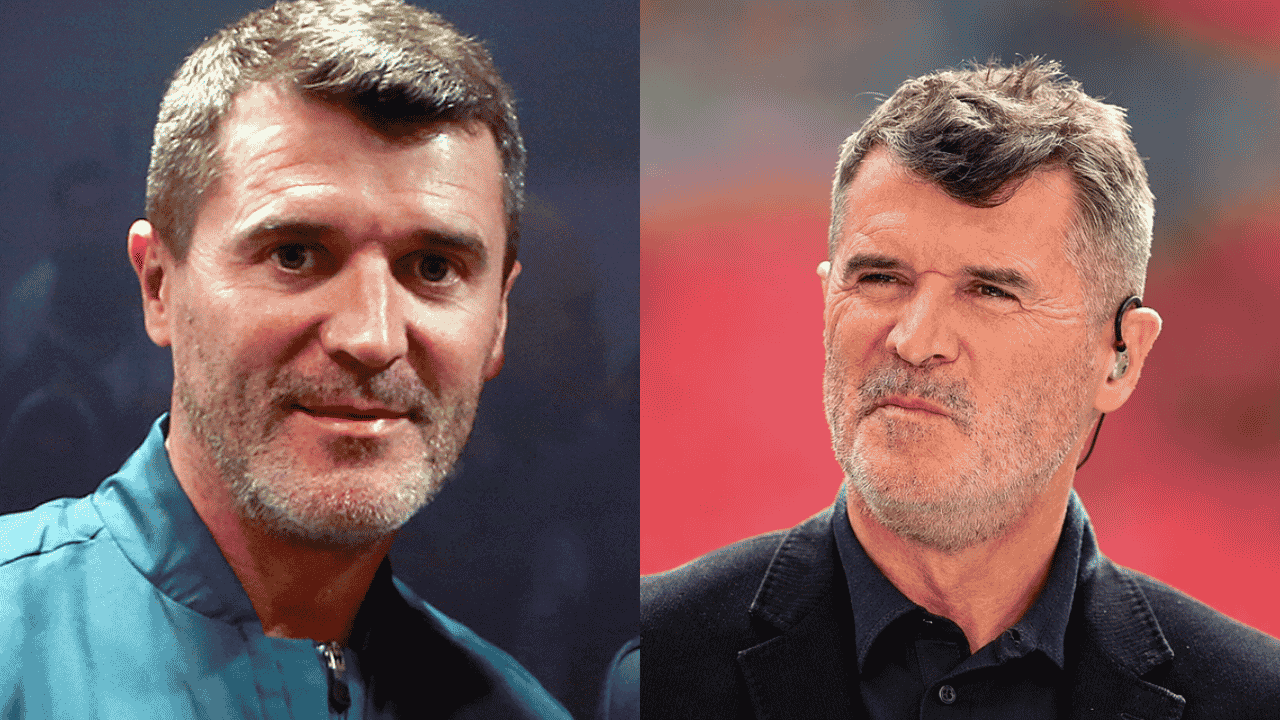
Roy Keane is remembered as one of the most competitive midfielders of his generation. His performances for Manchester United, leadership as club captain and demanding approach to football made him a major figure in English and Irish football. Away from the pitch, his career has included management, television punditry, books and public appearances. His personal life has also attracted attention, particularly his marriage to Theresa Doyle and his connection to professional footballer Taylor Harwood-Bellis through his daughter Leah. From his early days in Cork to his reputation as an outspoken television personality, Roy Keane’s story covers far more than his achievements as a player.
Who Is Roy Keane?
Roy Maurice Keane was born on 10 August 1971 in Mayfield, Cork, Ireland. He grew up in a working-class family and developed an interest in sport during childhood. Football eventually became his main focus, although boxing was another activity that shaped his early years. His determination and competitive nature became noticeable long before he reached professional football.
Keane became famous through his performances for Nottingham Forest and Manchester United. He also represented the Republic of Ireland internationally and later worked as a manager with Sunderland and Ipswich Town. After leaving management, he established himself as a television football pundit, appearing regularly in major football coverage. His direct opinions and willingness to criticise players have made him a recognisable personality beyond the football world.
Early Life and Family Background
Growing Up in Cork
Keane spent his childhood in Mayfield, an area of Cork with a strong local sporting culture. His family encouraged physical activity, and he became involved in football from a young age. He attended local schools while developing his sporting interests through community teams. His upbringing helped shape the determined personality that later became central to his reputation.
Football was not his only interest during childhood. Keane also trained as a boxer and won four novice bouts before concentrating fully on football. Boxing introduced him to discipline, physical preparation and the importance of standing his ground. These qualities later became visible in his approach to midfield battles and leadership responsibilities.
His First Steps in Football
Keane played youth football for Rockmount before moving into senior football with Cobh Ramblers. His performances attracted attention from English clubs, giving him an opportunity to pursue a professional career outside Ireland. Nottingham Forest eventually offered him a route into English football. The move marked the beginning of a career that would take him to some of the biggest clubs in Europe.
Beginning His Professional Career at Nottingham Forest
Keane joined Nottingham Forest in 1990 under manager Brian Clough. The move was a major opportunity for a young Irish midfielder who had only recently entered senior football. Clough recognised his potential and gave him opportunities to develop in a competitive English environment. Keane responded with energetic performances and quickly became an important member of the team.
His time at Forest helped him understand the demands of top-level football. He developed a reputation for strong tackling, determination and an ability to compete against experienced opponents. His performances attracted interest from larger clubs, particularly Manchester United. In 1993, he completed a move to Old Trafford for £3.75 million, which was a British transfer record at the time.
Roy Keane at Manchester United
Becoming a Key Midfielder
Manchester United became the defining club of Keane’s playing career. He arrived in 1993 and became part of a squad managed by Sir Alex Ferguson. His strength, stamina and ability to control the midfield made him an important player in the team’s success. He was not simply a defensive midfielder, as he could also contribute to attacking moves and score important goals.
Keane gradually became one of the team’s most influential figures. His performances earned the respect of supporters and teammates, while his demanding standards helped establish him as a natural leader. Following Eric Cantona’s retirement in 1997, Keane took over the Manchester United captaincy. The responsibility suited his personality, and he became closely associated with the club’s successful period.
Major Achievements at Manchester United
During his time at Old Trafford, Keane helped Manchester United win several major trophies. He was part of the team that dominated English football during the 1990s and early 2000s. His contribution was particularly important because he brought intensity and organisation to the middle of the pitch. His major honours with the club included:
- Seven Premier League titles.
- Four FA Cup victories.
- One UEFA Champions League title.
- The historic 1998–99 treble.
- Recognition as one of the leading midfielders of his generation.
- Induction into the Premier League Hall of Fame in 2021.
The 1998–99 season remains one of the most memorable periods in Manchester United’s history. The club won the Premier League, FA Cup and Champions League in the same campaign. Keane played a major role in that achievement, even though he missed the final European match because of suspension. His influence throughout the season showed why he was such an important member of Ferguson’s team.
The 1999 Champions League Semi-Final
One of Keane’s finest performances came against Juventus in the 1999 Champions League semi-final. Manchester United faced a difficult situation after falling behind, but the team fought back to secure a 3–2 victory. Keane scored an important goal and helped drive the comeback through his leadership and determination. His performance became one of the defining moments of his career.
However, the match also brought disappointment because Keane received a yellow card that ruled him out of the final. Manchester United eventually defeated Bayern Munich in Barcelona to win the trophy. Keane had to watch the decisive match from the sidelines despite his contribution to the team’s progress. The episode remains a memorable example of how individual achievement and personal disappointment can exist together in football.
Roy Keane and Sir Alex Ferguson
The relationship between Roy Keane and Sir Alex Ferguson played a major part in Manchester United’s success. Ferguson trusted Keane with the captaincy and depended on his leadership in difficult matches. Both men shared high expectations of professional standards and believed that players should take responsibility for their performances. Their strong personalities sometimes created tension, but their partnership produced several successful seasons.
Their relationship eventually broke down during the 2005–06 season. Keane had become increasingly critical of the team’s performances, and his comments about fellow players contributed to the growing disagreement. He left Manchester United in November 2005 after more than 12 years at the club. The departure surprised many supporters because he had been one of Ferguson’s most important players and captains.
The Alf-Inge Haaland Controversy
Roy Keane’s career also included one of football’s most discussed disciplinary incidents. His conflict with Norwegian midfielder Alf-Inge Haaland began during a match in 1997, when Keane suffered a serious knee injury while playing against Leeds United. Years later, in April 2001, Keane made a dangerous challenge on Haaland during a Manchester derby and was sent off. The incident became a major subject of debate because of the history between the two players.
Keane later discussed the tackle in his autobiography and acknowledged that he intended to hurt Haaland. The admission attracted widespread criticism and led to further disciplinary consequences. He received a suspension and a financial penalty from football authorities. Haaland continued playing after the incident, so it would be inaccurate to claim that Keane’s challenge directly ended his career.
International Career with the Republic of Ireland
Keane represented the Republic of Ireland at international level and became one of the country’s most recognisable footballers. He earned 67 international caps and played at the 1994 FIFA World Cup. Ireland reached the round of 16 at that tournament, giving Keane valuable experience on the international stage. His leadership and competitive approach made him an important figure for the national team.
The 2002 World Cup Dispute
The most controversial episode of his international career came before the 2002 FIFA World Cup. Keane disagreed with manager Mick McCarthy over the team’s preparation, facilities and professional standards at their training base in Saipan. The disagreement became increasingly heated, eventually leading to Keane leaving the squad before the tournament began. The incident received extensive media attention and became known as the Saipan controversy.
The dispute remained a major subject in Irish football for years. It raised questions about leadership, player expectations and the relationship between managers and senior footballers. Keane later explained his position in interviews and his autobiography, while McCarthy also gave his account of what happened. Their disagreement became the central subject of the 2025 film Saipan, which brought the story to a new audience.
Roy Keane and His Famous Dog Triggs
One unusual part of Keane’s personal history involves his Labrador, Triggs. During the 2002 World Cup controversy, photographers regularly captured Keane walking his dog after his departure from the Irish training camp. The images became familiar to readers following the story, and Triggs unexpectedly became associated with one of football’s biggest media controversies.
Triggs remained part of Keane’s family life for many years and died in 2012 at approximately 13 years old. Keane spoke emotionally about losing the dog and the companionship she had provided. He also supported Irish Guide Dogs for the Blind through fundraising activities. The story offers a more personal view of Keane, away from the intense public image associated with his football career.
His Final Playing Years at Celtic
After leaving Manchester United, Keane joined Celtic in December 2005. The Scottish club gave him an opportunity to continue playing at a high level after his departure from English football. He made his Celtic debut in January 2006, but his time at the club was short. A persistent hip problem affected his ability to continue playing.
Keane announced his retirement in June 2006. His decision brought an end to a professional playing career that had included major domestic trophies, European success and international appearances. Although his spell at Celtic was brief, it remained an important final chapter in his football journey. He later moved into management and began building a different reputation within the sport.
Roy Keane’s Managerial Career
Sunderland and Championship Promotion
Keane entered management in August 2006 when he took charge of Sunderland. The club was struggling in the Championship, but he quickly changed the team’s direction. Sunderland improved under his leadership and eventually won promotion to the Premier League as Championship champions in the 2006–07 season. Their successful campaign established Keane as a manager capable of making an immediate impact.
Sunderland remained in the Premier League during his first season back in the top division. However, his time at the club became increasingly difficult, and he resigned in December 2008. His achievement in guiding Sunderland to promotion remained the strongest part of his managerial record. The experience also showed that the demands of management were different from those of being a successful player.
Ipswich Town and Assistant Manager Roles
Keane became manager of Ipswich Town in April 2009. His appointment created expectations that he could help the club challenge for promotion, but results did not develop as hoped. He left the position in January 2011 after a difficult period. His next opportunities came through assistant-management roles rather than another long-term managerial appointment.
He worked with Martin O’Neill at the Republic of Ireland, Aston Villa and Nottingham Forest during different periods. These roles allowed him to remain involved in football while gaining experience alongside other managers. His work with Ireland was particularly significant because the team qualified for Euro 2016. Keane’s coaching career did not match his playing achievements, but it kept him connected to professional football.
Roy Keane and Martin O’Neill
Martin O’Neill appointed Keane as his assistant manager with the Republic of Ireland in November 2013. Their partnership brought together two experienced figures with strong football personalities. They worked through the qualification campaign for Euro 2016 and helped Ireland reach the tournament in France. The team’s victory over Italy in the group stage became one of the memorable moments of their time together.
Ireland progressed to the round of 16 before being eliminated by France. Keane and O’Neill later worked together again at Nottingham Forest in 2019. Their connection was based on professional football rather than a family relationship. For readers interested in both men, their time together offers a natural connection between their biographies.
Roy Keane’s Wife and Family Life
Marriage to Theresa Doyle
Roy Keane married Theresa Doyle in 1997. The couple have maintained a relatively private family life despite his long career in professional football and television. Keane is known for speaking openly about football, but he rarely shares unnecessary details about his family. This contrast between his public personality and private home life has attracted interest from supporters.
Their marriage has continued through the different stages of his career, including his time at Manchester United, his managerial appointments and his work as a pundit. Theresa has generally stayed away from the attention that comes with being connected to a famous footballer. Their family life is therefore best discussed through confirmed public information rather than speculation. Keane’s preference for privacy should be respected when writing about his relatives.
How Many Children Does Roy Keane Have?
Roy Keane and Theresa Doyle have five children: Shannon, Caragh, Aidan, Leah and Alanna. The family has mostly remained outside the football spotlight, although certain connections have attracted public attention. His daughter Leah has received particular interest because of her relationship with professional footballer Taylor Harwood-Bellis. The family connection has brought Keane into conversations about a younger generation of English football.
Roy Keane’s Daughter and Son-in-Law
Leah Keane is married to Taylor Harwood-Bellis, an English professional footballer who plays as a defender. Their relationship makes him Roy Keane’s son-in-law. Harwood-Bellis has built his own career through English football and has represented England at international level. His connection to Keane is interesting to football supporters, but his career achievements should be considered separately from his family relationship.
Roy Keane’s Net Worth and Sources of Income
Roy Keane’s exact net worth has not been confirmed through publicly available financial records. Online celebrity-wealth websites publish estimates, but these figures often lack clear explanations or reliable evidence. It would therefore be misleading to present one estimated amount as an established fact. A more useful approach is to examine the professional activities that have contributed to his income.
His earnings have come from several stages of his career. Professional football contracts at Nottingham Forest, Manchester United and Celtic formed an important part of his financial background. His managerial positions, television punditry, autobiography and media appearances have also provided professional income. His long association with major football organisations has helped him maintain a public career after retirement.
Roy Keane’s Television and Pundit Career
After stepping away from management, Keane became a familiar face in football broadcasting. He joined Sky Sports as a pundit in 2019 and developed a reputation for direct analysis. His comments often focus on players’ effort, attitude, decision-making and responsibility. He is not afraid to disagree with other analysts, which has helped make his appearances popular with football audiences.
Keane has also appeared in ITV football coverage and on The Overlap, where he joins former players and presenters for discussions about the sport. His partnership with Gary Neville has been particularly noticeable because both men have experience of playing at the highest level. Their conversations often cover Manchester United, the Premier League and changes in modern football. His television career has introduced him to viewers who may never have watched him play.
Roy Keane’s Film and Acting Appearances
The film Saipan brought one of the most controversial episodes of Keane’s career to the cinema. Released in 2026 in the UK and Ireland, the film recreates the dispute between Keane and Mick McCarthy before the 2002 World Cup. Éanna Hardwicke portrays Keane, while Steve Coogan plays McCarthy. The story focuses on the disagreement over the team’s preparation and the events that led to Keane leaving the Irish squad.
Keane has also appeared in television and media productions as himself. His screen credits include football-related programmes, interviews and entertainment appearances. These projects should not be confused with a conventional acting career, as his main work outside football has remained punditry and media analysis. The Saipan film is particularly relevant because it shows how an event from his playing career became a subject of wider public interest.
Roy Keane’s Personality and Football Legacy
Keane’s reputation has always been closely linked to his competitive personality. As a player, he demanded commitment from himself and expected similar standards from teammates. His approach sometimes created disagreements, but it also helped him become one of the most influential captains in Manchester United’s history. His performances in major matches remain an important part of his football legacy.
His public image has developed since retirement. Television appearances have shown a personality that combines serious analysis with humour and occasional self-deprecation. His conversations with former teammates and opponents have also offered different perspectives on his career. Whether remembered as a Manchester United captain, an Irish international, a manager or a pundit, Keane remains a distinctive figure in football.
Conclusion
Roy Keane’s life and career extend well beyond his achievements at Manchester United. His journey began in Cork, developed through Nottingham Forest and reached its highest point during a successful period at Old Trafford. His international career, the Saipan controversy, his time in management and his work as a television pundit all added different chapters to his story. His family life, relationship with Theresa Doyle and connection to Taylor Harwood-Bellis also attract interest, although he has largely protected his relatives from public attention. Keane remains a memorable football personality because of his leadership, competitive standards and willingness to speak honestly about the game.
Frequently Asked Questions
1. Who is Roy Keane?
Roy Keane is a former Irish professional footballer, manager and television pundit. He is best known for captaining Manchester United and winning seven Premier League titles with the club. He also represented the Republic of Ireland internationally and later managed Sunderland and Ipswich Town.
2. Who is Roy Keane’s wife?
Roy Keane is married to Theresa Doyle. They married in 1997 and have five children together. The couple generally keep their family life private.
3. How many children does Roy Keane have?
Roy Keane has five children with his wife, Theresa Doyle. Their names are Shannon, Caragh, Aidan, Leah and Alanna. His daughter Leah is married to professional footballer Taylor Harwood-Bellis.
4. What happened between Roy Keane and Alf-Inge Haaland?
Keane and Haaland had a long-running disagreement that began after a match in 1997. In April 2001, Keane was sent off for a dangerous challenge on Haaland during a Manchester derby. Keane later admitted that he intended to hurt him, and the incident resulted in disciplinary action.
5. What is Roy Keane’s net worth?
Roy Keane’s exact net worth has not been publicly verified. His income has come from professional football, management, television punditry, books and media appearances. Online estimates should be treated cautiously because they are not supported by confirmed financial records.