








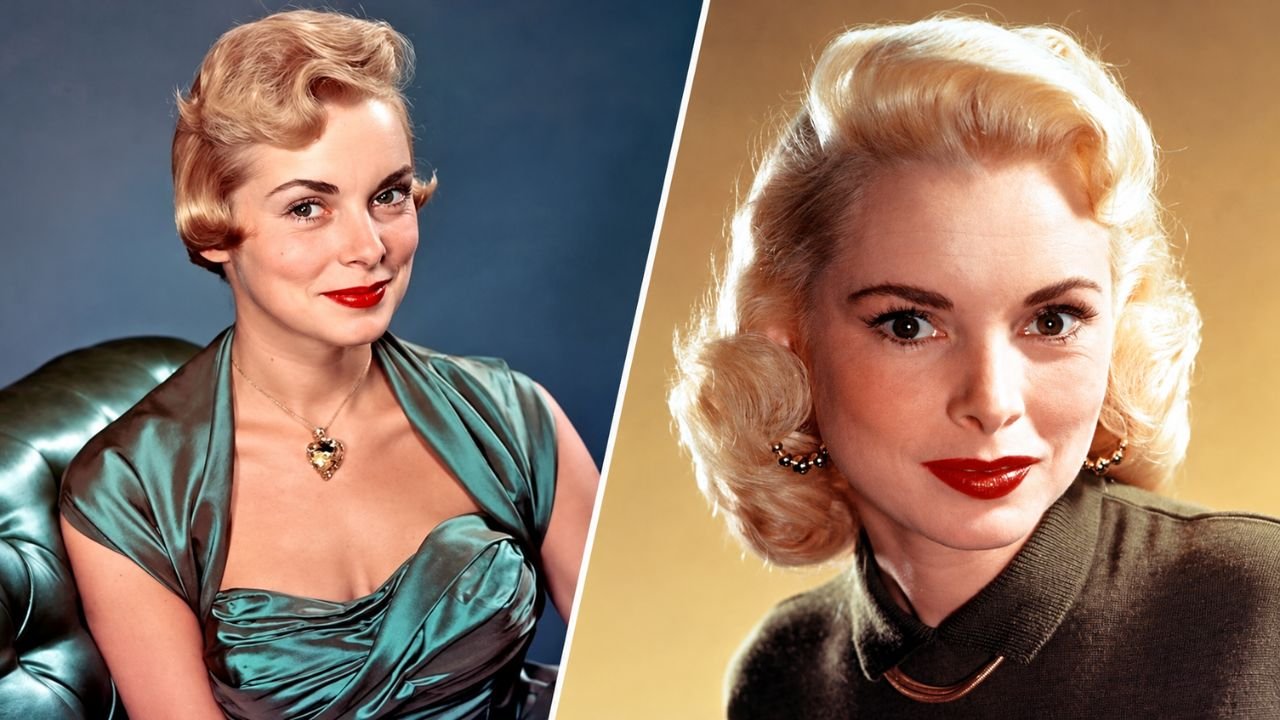
Janet Leigh was one of Hollywood’s most recognizable actresses, but her career was much broader than the role that made her a lasting name in cinema history. Born Jeanette Helen Morrison in California in 1927, she entered the film industry unexpectedly and quickly became one of MGM’s young stars. Her career later took a dramatic turn when Alfred Hitchcock cast her as Marion Crane in Psycho, a performance that earned her a Golden Globe and an Academy Award nomination. From her marriages and family life to her work in films, television, theater, and publishing, Janet Leigh built a career that lasted for more than five decades.
Janet Leigh Early Life and Family Background
Janet Leigh was born Jeanette Helen Morrison on July 6, 1927, in Merced, California. She was the only child of Helen Lita and Frederick Robert Morrison, and her family lived a modest life before she entered Hollywood. The family eventually moved to Stockton, where Leigh spent much of her childhood. Her early years were far removed from the glamorous image that would later become associated with her name.
Leigh was known for being an intelligent and academically capable student. She skipped several school grades and graduated from high school at a young age. Before becoming a professional actress, she studied music and psychology at the College of the Pacific. Her education was interrupted when an unexpected opportunity brought her into the entertainment business.
How Janet Leigh Was Discovered by Hollywood
Janet Leigh’s entry into Hollywood was unusual because acting was not originally the main focus of her life. While her parents were working at a ski resort in Northern California, a photograph of the young Leigh caught the attention of actress Norma Shearer. Shearer became interested in her appearance and helped arrange a screen test. The opportunity eventually brought Leigh to the attention of Metro-Goldwyn-Mayer.
Her first major screen opportunity came with The Romance of Rosy Ridge in 1947. MGM recognized her potential and began developing her as a young leading actress. Her professional name was changed from Jeanette Morrison to Janet Leigh, giving her a name that would eventually become familiar to movie audiences around the world. The transition from an unknown California teenager to a Hollywood performer happened remarkably quickly.
Janet Leigh’s Rise at MGM
During the late 1940s and early 1950s, Janet Leigh became associated with MGM’s young generation of leading actresses. She appeared in romantic comedies, dramas, adventure films, and period productions, allowing her to demonstrate that she could handle more than one type of character. Her early career included films such as Little Women, Angels in the Outfield, Scaramouche, and The Black Shield of Falworth. These productions helped establish her as a reliable and increasingly popular screen performer.
Leigh also had the opportunity to work alongside some of the biggest names in Hollywood. Her early filmography connected her with actors and filmmakers who were already major figures in American cinema. As her experience grew, she moved beyond the youthful roles that initially defined her career. Leaving MGM in the mid-1950s gave her greater opportunities to choose different projects and develop a more mature screen identity.
Some notable films from different stages of her career include:
- The Romance of Rosy Ridge
- Little Women
- Angels in the Outfield
- Scaramouche
- The Black Shield of Falworth
- Touch of Evil
- Psycho
- The Manchurian Candidate
- Bye Bye Birdie
- Harper
Janet Leigh’s Career Beyond MGM
After leaving MGM, Janet Leigh continued building her career with projects outside the studio system. This period allowed her to take on roles that were more serious and challenging than some of the parts she had played during her early years. One of the most important films from this stage was Orson Welles’s Touch of Evil, released in 1958. The film became highly regarded and later stood alongside Psycho and The Manchurian Candidate among the performances Leigh was especially proud of.
Her work during this period showed that she was not simply a former MGM star trying to maintain her popularity. She was capable of choosing projects with stronger dramatic material and working with directors known for distinctive filmmaking styles. Her career was entering a period in which her performances could have a greater impact on her reputation as an actress. That development became particularly important when Alfred Hitchcock offered her the role that would define her legacy.
Janet Leigh in Psycho as Marion Crane
Janet Leigh Psycho is the search phrase most closely connected with the actress’s career, and for good reason. In Alfred Hitchcock’s 1960 thriller Psycho, Leigh played Marion Crane, a secretary who steals money from her employer and begins a journey that leads her to the isolated Bates Motel. The character appears to be central to the story, but Hitchcock deliberately turns audience expectations upside down. Marion’s fate became one of the film’s most shocking moments.
Hitchcock’s decision to cast Leigh was particularly significant because she was already a recognizable Hollywood actress. Audiences had certain expectations about what would happen to a star of her status in a movie. Hitchcock used those expectations to increase the impact of Marion Crane’s story. Leigh’s performance helped establish the emotional foundation for one of the most influential thrillers in American film history.
The Famous Psycho Shower Scene
The shower sequence became the defining image of Janet Leigh’s career. Hitchcock created the scene through rapid editing, carefully arranged camera angles, sound effects, music, and short shots rather than showing the attack in a conventional way. Leigh had to communicate fear and vulnerability while the scene was constructed around a highly controlled production process. The result became one of the most studied and discussed sequences in film history.
Despite the scene’s reputation, Leigh was not actually filmed completely nude during the shower sequence. Production techniques were used to create the appearance of nudity while maintaining the necessary protections for the actress. The scene required intense physical and emotional performance, particularly because Leigh had to convey the terror of Marion Crane in a matter of seconds. Her work helped turn a relatively short appearance into one of the most memorable performances of her career.
Janet Leigh’s Awards for Psycho
Leigh’s performance in Psycho received major recognition. She won the Golden Globe Award for Best Supporting Actress and received an Academy Award nomination in the same category. The recognition was significant because the role was very different from many of the glamorous leading parts that had defined her earlier career. Psycho gave her a new place in film history and permanently connected her name with Hitchcock’s cinema.
The film also changed how audiences remembered her. Leigh had already spent more than a decade working in Hollywood before Psycho was released, but Marion Crane became the character most people associated with her. Her career demonstrates how a single role can become larger than an actor’s previous body of work without completely replacing the importance of everything that came before it.
Janet Leigh’s Other Acclaimed Performances
Although Psycho became her signature film, Janet Leigh had other important performances. Touch of Evil gave her the opportunity to work with Orson Welles in a dark crime drama that has since become highly regarded. The Manchurian Candidate, released in 1962, provided another major dramatic role during one of the strongest periods of her career. Leigh’s work in these films demonstrated her ability to move comfortably between suspense, psychological drama, and more conventional Hollywood productions.
Her later filmography included Bye Bye Birdie and Harper, among other projects. She did not remain locked into one genre after the success of Psycho. Instead, she continued accepting film and television work while gradually expanding into other areas of entertainment. Her willingness to work across different formats helped her maintain a professional career long after her early MGM years.
Janet Leigh Spouse and Marriages
The subject of Janet Leigh spouse is often reduced to Tony Curtis, but her personal history included four marriages. Her first marriage was to John Carlyle, and the relationship was annulled. She later married Stanley Reames before eventually becoming one half of one of Hollywood’s most famous celebrity couples with Tony Curtis. Her fourth marriage was to Robert Brandt, who remained her husband for the rest of her life.
Her marriages took place during different stages of her personal and professional development. The relationship with Tony Curtis attracted particularly strong public attention because both were successful actors and became a prominent Hollywood couple. However, Leigh’s life with Robert Brandt represented a much longer period of marriage than her relationship with Curtis. Looking at all four marriages provides a more accurate picture of her personal life than focusing on one famous relationship.
Janet Leigh and Tony Curtis
Janet Leigh and Tony Curtis married in 1951 and became one of the most recognizable couples in Hollywood. They appeared together publicly and also worked professionally during their marriage. Their relationship attracted considerable attention from the press because both were established movie stars during a period when Hollywood celebrity marriages were closely followed by the public.
The couple had two daughters, Kelly Curtis and Jamie Lee Curtis. Their marriage ended in divorce in 1962, after which both continued their careers separately. Leigh later married Robert Brandt, while Curtis remained an important figure in American film. Despite their divorce, the connection between Janet Leigh and Tony Curtis remains an important part of Hollywood history.
Leigh and Curtis also shared professional interests beyond acting. They were involved with Curtleigh Productions, which reflected Leigh’s interest in the business side of filmmaking. This part of her career is sometimes overlooked when biographies focus entirely on her acting work. It shows that she was involved in producing and professional decision-making as well as performing in front of the camera.
Janet Leigh Children and Family
Janet Leigh had two daughters, Kelly Curtis and Jamie Lee Curtis, during her marriage to Tony Curtis. Both daughters grew up around Hollywood, although Jamie Lee Curtis ultimately became the more widely known actress. The connection between Janet Leigh and Jamie Lee Curtis became particularly interesting because both women established strong associations with suspense and horror cinema.
Jamie Lee Curtis became famous after appearing in John Carpenter’s Halloween in 1978. Her later career included major dramatic, comedic, and horror roles, eventually making her an Oscar-winning actress. The careers of mother and daughter created a remarkable Hollywood family connection. Janet Leigh had already become famous through Psycho before her daughter became associated with Halloween.
Janet Leigh and Jamie Lee Curtis on Screen
Janet Leigh and Jamie Lee Curtis shared the screen in The Fog in 1980. Their appearance together was particularly notable because of the connection between Leigh’s Psycho legacy and Jamie Lee Curtis’s emerging reputation as a horror actress. Although they were both in the film, their characters do not have a substantial mother-daughter relationship within the story itself. Their shared appearance nevertheless became an interesting moment in the history of horror cinema.
The two later appeared together again in Halloween H20: 20 Years Later in 1998. By that time, Jamie Lee Curtis had already established herself as one of the most recognizable actresses in the horror genre. Their connection gave audiences a chance to see two generations of actresses whose careers had become linked with suspense and horror.
Janet Leigh’s Television and Stage Work
Janet Leigh’s career extended well beyond theatrical films. As Hollywood changed, she worked in television and appeared in programs and productions that allowed her to remain active during later stages of her career. Television gave her an opportunity to take on different kinds of roles without relying exclusively on major studio films.
She also explored theater and made her Broadway debut in the 1970s. Her stage work demonstrated that she was willing to challenge herself outside the medium in which she had first become famous. Although her Broadway career was relatively brief, it added another dimension to her professional life. Her career therefore included film, television, stage work, and writing rather than being limited to Hollywood movies.
Janet Leigh as an Author
Janet Leigh also became an author and used her writing to explore both her personal experiences and the entertainment industry. Her autobiography, There Really Was a Hollywood, was published in 1984. The book offered readers an opportunity to see Hollywood from the perspective of someone who had experienced its studio era from the inside.
She later wrote Psycho: Behind the Scenes of the Classic Thriller, which focused on the making and legacy of Hitchcock’s famous film. She also published the novels House of Destiny and The Dream Factory. Her books are another reason her career deserves to be viewed as more than a collection of acting credits.
Janet Leigh Cause of Death
Janet Leigh cause of death is another subject frequently searched by readers interested in her life. Leigh died on October 3, 2004, at her home in Beverly Hills, California, at the age of 77. Reports about her final illness identify vasculitis as a significant health problem before her death. Some secondary accounts have also described a heart attack in connection with the circumstances surrounding her death.
The safest way to discuss her death is to distinguish the documented medical condition from conflicting descriptions found in secondary sources. Leigh had experienced health difficulties during the final period of her life, and her death marked the end of a career that had stretched from the late 1940s into the early 2000s. She was survived by her husband Robert Brandt and her daughters. Her death received attention throughout the entertainment industry because of the lasting influence of her work.
Janet Leigh’s Final Years and Later Appearances
Leigh remained connected with entertainment even after her most active period as a leading film actress had passed. Her later appearances included projects that drew on her status as a classic Hollywood performer. She also appeared in Halloween H20: 20 Years Later, which created another connection between her career and the horror genre.
Her final years were shaped by the legacy of the work she had already completed. Rather than disappearing from public memory, she continued to be discussed through Psycho, her relationship with Jamie Lee Curtis, and the continuing popularity of classic Hollywood cinema. Her influence became especially visible whenever filmmakers, actors, and audiences revisited Hitchcock’s work.
Janet Leigh’s Legacy in Hollywood
Janet Leigh’s legacy rests on more than one famous scene. She successfully moved from MGM’s glamorous studio system into more challenging films and continued working across several forms of entertainment. Her performances in Touch of Evil, Psycho, and The Manchurian Candidate demonstrate the range of her work during an important period in American cinema.
Her influence also continued through her family. Jamie Lee Curtis became a major actress in her own right, creating an unusual connection between classic Hollywood and later generations of American cinema. Janet Leigh’s name therefore remains connected not only to Hitchcock but also to one of Hollywood’s most successful acting families. Her career continues to attract interest because her most famous role remains culturally recognizable while her broader body of work provides a much deeper story.
Janet Leigh’s Hollywood Walk of Fame Recognition
Janet Leigh received a star on the Hollywood Walk of Fame in 1960. The recognition came during the same period in which Psycho was establishing her as an international star. Her Walk of Fame honor reflected the success she had achieved after more than a decade in the film industry.
The timing is particularly significant because it demonstrates that Leigh was already a respected Hollywood performer before her career became permanently associated with Marion Crane. Psycho strengthened that reputation rather than creating it from nothing. Her earlier MGM work provided the foundation for the status she achieved during the 1950s and early 1960s.
Janet Leigh’s Connection to the University of the Pacific
Leigh’s relationship with the College of the Pacific remained part of her legacy long after her Hollywood career began. A theater at the University of the Pacific was later named the Janet Leigh Theatre in recognition of her connection to the institution. The dedication helped preserve her name in a place associated with her education.
This part of her legacy is easy to overlook because her connection with Psycho is so dominant. However, it reflects another side of Leigh’s life and provides evidence that her legacy extended beyond the film industry. Her educational background and later achievements remained connected through the university’s recognition.
Janet Leigh in Popular Culture
The continuing popularity of Psycho has ensured that Janet Leigh remains recognizable to audiences who were born long after her death. Her portrayal of Marion Crane is regularly discussed in film studies, retrospectives, and conversations about the history of suspense cinema. The shower sequence has become a reference point for filmmakers and audiences studying how editing, sound, performance, and suggestion can create fear without relying on graphic violence.
Leigh’s life was also portrayed indirectly through the 2012 film Hitchcock, in which Scarlett Johansson played Janet Leigh. The film focused on Alfred Hitchcock and the production of Psycho, bringing Leigh’s role in the making of the film to a new generation of viewers. Her continued appearance in discussions about classic cinema shows that her contribution remains relevant decades after the original film was released.
Why Janet Leigh Remains Famous Today
Janet Leigh remains famous because her career connects several important periods in Hollywood history. She began during the studio era, became a major actress in the 1950s, worked with directors such as Alfred Hitchcock and Orson Welles, and continued appearing on screen for decades. Her marriage to Tony Curtis and her relationship with Jamie Lee Curtis also placed her within one of the most recognizable families in American entertainment.
Her greatest cultural achievement remains Psycho, but reducing her career to that film would miss much of what made her interesting. She was an actress who successfully changed her screen image, a producer, an author, a mother, and a performer who worked in film, television, and theater. Her career also shows how a Hollywood star can remain relevant through both individual performances and the influence of the family that follows her.
Frequently Asked Questions About Janet Leigh
Who was Janet Leigh?
Janet Leigh was an American actress best known for playing Marion Crane in Alfred Hitchcock’s Psycho. Born Jeanette Helen Morrison in 1927, she began her film career in the late 1940s and worked in Hollywood for more than five decades. Her career included films, television, theater, and writing. She died in 2004 at the age of 77.
Who was Janet Leigh’s spouse?
Janet Leigh had four marriages during her life. Her spouses included John Carlisle, Stanley Reames, Tony Curtis, and Robert Brandt. Tony Curtis was her most famous husband because both were major Hollywood actors and became one of the industry’s best-known couples. Robert Brandt was her final husband and remained married to Leigh until her death.
What did Janet Leigh play in Psycho?
Janet Leigh played Marion Crane in Alfred Hitchcock’s Psycho. Marion is a secretary who steals money from her employer and travels to the Bates Motel, where she becomes the victim of the film’s famous shower attack. Leigh’s performance earned her a Golden Globe and an Academy Award nomination. The role became the performance most strongly associated with her career.
What was Janet Leigh’s cause of death?
Janet Leigh died on October 3, 2004, at the age of 77. Vasculitis was identified as a significant illness associated with her final period of life, while some secondary accounts also describe a heart attack in connection with her death. Because accounts differ in how they describe the immediate circumstances, the medical information should be presented carefully. She died at her home in Beverly Hills.
Was Janet Leigh related to Jamie Lee Curtis?
Yes. Jamie Lee Curtis is Janet Leigh’s daughter from her marriage to Tony Curtis. Jamie Lee Curtis became a successful actress herself and became particularly famous for horror films such as Halloween. Janet Leigh and Jamie Lee Curtis appeared together in The Fog and later in Halloween H20: 20 Years Later.
Conclusion
Janet Leigh’s story is much larger than her famous role in Psycho. She began life as Jeanette Helen Morrison, entered Hollywood after being discovered through a photograph, and developed from an MGM ingénue into a respected actress capable of taking on demanding dramatic roles. Her work with Alfred Hitchcock, Orson Welles, and other major filmmakers gave her a permanent place in American cinema, while her books, stage work, television appearances, and producing activities added further dimensions to her career.
Her personal life also remains closely connected with Hollywood history through her marriages, her daughters, and especially Jamie Lee Curtis. Janet Leigh’s influence continued after her death because Marion Crane remains one of cinema’s most recognizable characters and because her daughter carried the family’s acting legacy into another generation. More than two decades after her death, Janet Leigh continues to be remembered as a talented actress whose career crossed the studio era, modern Hollywood, and the lasting history of the thriller and horror genres.