









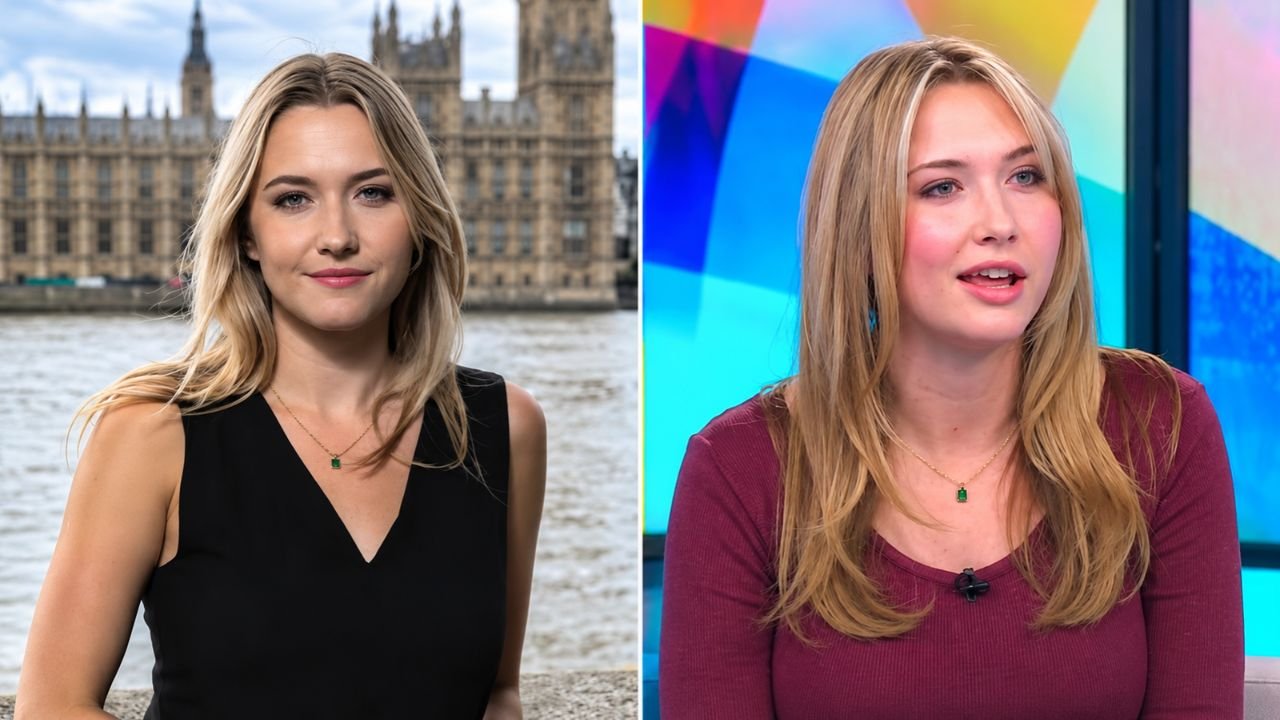
Poppy Coburn is a British journalist and political commentator whose career has developed across newspapers, broadcasting and political discussion. She studied History and Politics at the University of Cambridge before moving into journalism and working with organisations including UnHerd and GB News. She later joined The Telegraph’s comment and opinion operation, where her work has focused heavily on British politics, culture and public debate. Her public profile has also grown through podcast appearances, media discussions and her involvement in political events.
Poppy Coburn’s Early Background and Education
Poppy Coburn studied History and Politics at the University of Cambridge between 2018 and 2021. Her university education gave her a strong foundation in political thought, history and the development of political institutions. Her academic interests included the work of Thomas Hobbes, whose ideas about government, authority and political order have remained influential in political philosophy. Studying these subjects provided a natural foundation for a later career focused on political journalism and commentary.
Her time at Cambridge was not limited to academic study. Poppy Coburn became involved in university politics and public debate during her student years, including participation in discussions connected with the Cambridge Union. Her university experience placed her in an environment where political arguments, public speaking and competing ideas were part of everyday student life. These experiences helped shape the interests that later became visible in her journalism.
Her involvement in university affairs
Coburn also became involved in university representation while studying at Cambridge. Available biographical information says she served as a student representative connected with the University Council and took part in university discussions. This experience gave her an early opportunity to examine how institutions operate from the inside rather than simply studying political theory in the classroom. It also added an institutional dimension to her later interest in government, bureaucracy and political decision-making.
Some accounts of her Cambridge years contain additional details about student elections and committee work. Those claims are less firmly documented than her degree and should therefore be treated cautiously. What is clear is that her university years combined formal study with participation in political and institutional discussions. That combination became relevant to the direction of her professional career.
How Poppy Coburn Started Her Journalism Career
Poppy Coburn entered journalism at a time when political media was changing rapidly. Digital publications, podcasts and television news were creating opportunities for younger writers and producers to develop public profiles without following a traditional newspaper-only career path. Her early professional experience included work connected with The Critic, UnHerd and GB News. These positions exposed her to political writing, editorial production and broadcast media.
Her time at UnHerd was particularly significant because she contributed articles covering political and cultural subjects. Her writing examined issues such as free speech, universities, feminism, activism, policing and generational politics. Rather than focusing on one narrow subject, her early work showed an interest in the relationship between politics, institutions and changing social attitudes. This became a recurring feature of her later commentary.
Her work at UnHerd
During her time at UnHerd, Poppy Coburn developed experience writing for an audience interested in politics, culture and intellectual debates. The publication gave her an opportunity to discuss topics that extended beyond conventional party politics. Her articles touched on controversies surrounding universities, public institutions, social movements and freedom of expression. This period helped establish her as a writer interested in arguments rather than only political personalities.
Her early work is also useful when examining how her career developed. It shows that her interest in politics was not something that appeared only after she joined a major newspaper. Questions about institutional power, public debate and social change were already present in her writing. The transition from digital political publishing to larger media organisations therefore followed a clear professional direction.
Poppy Coburn and GB News
Another important stage of her career came through GB News. Poppy Coburn worked at the broadcaster as a producer, giving her experience on the production side of political television. Working behind the scenes requires a different set of skills from writing newspaper commentary because television production involves research, timing, guests, editorial decisions and coordination. This experience added broadcasting knowledge to her background as a writer.
Her GB News experience also placed her within a highly political media environment. The broadcaster has become an important part of Britain’s modern news landscape, particularly in debates involving conservatism, culture and national politics. Coburn’s work there contributed to a career that crossed the boundaries between written journalism and broadcast media. It also helped prepare her for later appearances and discussions in front of audiences rather than solely behind the scenes.
Poppy Coburn’s Career at The Telegraph
The Telegraph became one of the most important stages in Poppy Coburn’s professional development. Her work has been associated with the newspaper’s comment and opinion operation, where journalists contribute analysis and arguments on political and cultural issues. Profiles have described her in editorial roles connected with the comment section. Her responsibilities have therefore extended beyond simply reporting events and into the wider world of opinion journalism.
The Telegraph has given Coburn a larger platform for discussing British political life. Her work has addressed subjects including government, political parties, immigration, culture, social media and debates within conservatism. She has also contributed to discussions involving international politics and changing political attitudes among younger generations. Her work demonstrates how political journalism can combine current events with broader arguments about society.
Her role in opinion journalism
Opinion journalism differs from straightforward news reporting because it allows writers to develop an argument and explain how they interpret political developments. Poppy Coburn’s work fits strongly within this tradition. Her articles and appearances often examine why political movements develop, how institutions behave and how public attitudes change. This has helped establish her as a commentator rather than only a reporter.
Her professional role has also involved editorial responsibilities. Working within a comment operation means assessing ideas, shaping arguments and helping determine how political issues are presented to readers. That experience is significant because it shows that her career is not based exclusively on writing individual articles. It includes the broader editorial work required to produce political opinion content.
The Political Issues Poppy Coburn Discusses
Poppy Coburn has developed a public profile through commentary on questions surrounding British politics and political culture. Her published work and event biographies associate her with discussions about government overreach, bureaucratic power, political campaigning and institutional influence. She has also written about free expression and debates surrounding universities and public organisations. These subjects connect many of her articles even when the individual stories are different.
Her political interests extend into questions about the changing British right. She has discussed conservatism, Brexit and the political attitudes of younger people. Her commentary has also considered how traditional political parties respond to changing expectations from voters. These subjects have made her a participant in wider debates about the future direction of British politics.
Major themes in her commentary
The following subjects appear repeatedly in her public work:
- British conservatism and its changing identity
- Government and institutional power
- Free speech and public debate
- Political campaigning and charities
- Universities and cultural disputes
- Social media and its influence on politics
- Immigration and national political debates
- Generational differences in political attitudes
- The future of the Conservative Party
- The development of younger political movements
These themes help explain why Poppy Coburn has attracted attention beyond conventional newspaper reporting. Her work often connects an individual political story with a larger question about institutions or society. That approach gives her commentary a broader focus than simply following daily political events.
Poppy Coburn and Political Debate
Coburn’s public appearances have also contributed to her reputation as a political commentator. She has participated in podcasts, discussions and public events where political ideas are debated in greater depth than they normally are in short news reports. Her appearances have included conversations about British politics and the development of younger conservative movements. These discussions have given audiences more insight into the issues that influence her writing.
Her public commentary should be understood through the subjects she has chosen to discuss rather than through unsupported assumptions about her private political identity. Political journalism often involves examining arguments from several sides, and Coburn’s work includes strong opinions on controversial subjects. Readers can therefore learn more about her perspective by looking at her published arguments and public discussions. This is more useful than relying on labels without context.
Poppy Coburn and the 2024 Publius Fellowship
One notable achievement in Poppy Coburn’s career was her selection as a 2024 Publius Fellow at the Claremont Institute. The fellowship is connected with a programme focused on political thought and American constitutional ideas. Her fellowship biography highlighted her work in journalism and her academic background in History and Politics at Cambridge. The recognition added another significant element to her professional profile.
The fellowship is worth mentioning because it connects her journalism with her continuing interest in political philosophy and institutions. Her academic background had already given her an interest in political thinkers and questions of government. The fellowship provided another setting in which those interests could be developed. It also illustrates how her career has extended beyond newsroom work into broader political and intellectual discussions.
Poppy Coburn’s Media and Podcast Work
Poppy Coburn has expanded her media presence through podcasts and other forms of discussion. One notable project associated with her is The Weekend T, where she has appeared alongside Telegraph journalist Michael Deacon. The programme discusses British politics, culture, royal news and unusual stories from the week’s headlines. Podcasting gives her a different format from newspaper writing because conversations can explore topics in a more informal and extended way.
Her media appearances have helped make her more recognisable to audiences who may not regularly read newspaper opinion sections. Podcasts and television discussions allow journalists to explain their thinking directly rather than relying only on written articles. For Coburn, this has added another dimension to a career that already spans journalism and broadcasting. It also reflects the increasingly mixed nature of modern political media careers.
From producer to public commentator
Coburn’s career is notable because she has worked on several sides of the media industry. She has experience as a writer, producer, editor and public commentator. Each role involves different responsibilities, from researching stories and producing broadcasts to shaping opinion pieces and discussing political questions publicly. Together, these experiences have helped create a broader professional profile.
This background also explains why her career cannot be reduced to one job title. Someone who begins in production can develop an understanding of how television operates before moving into writing and editorial work. Coburn’s career followed a path that crossed those areas. Her current public profile reflects that combination of editorial, journalistic and broadcast experience.
Poppy Coburn Age and Birth Details
The question of Poppy Coburn age appears frequently in online searches, but a precise age should not be presented as confirmed without a reliable source. Several secondary websites publish a date of birth, but those claims are not consistently supported by primary biographical records. Because of that uncertainty, an exact age is better treated as unverified rather than stated as established fact. Her Cambridge education and career timeline provide stronger information about her professional background.
This distinction matters when writing a biography. A date copied from one biography website can quickly appear across dozens of other pages without becoming more reliable. For Poppy Coburn, the publicly documented parts of her education and career are much easier to verify than her exact birth information. A responsible biography should make that difference clear.
Poppy Coburn Family and Parents
Searches for Poppy Coburn family and Poppy Coburn parents also produce claims on secondary biography websites. However, reliable public sources do not provide enough evidence to establish detailed information about her parents, family background or private relatives. Her professional profiles concentrate on her education and journalism career rather than her family. As a result, there is no strong basis for publishing specific names or occupations of relatives as established facts.
The limited information about her family is consistent with the way Coburn presents herself publicly. Her professional identity is centred on journalism, political commentary and media work. She has not built her public profile around personal or family details. For readers interested in her biography, her education and career provide substantially better documented material.
Is Poppy Coburn Married?
The question of whether Poppy Coburn is married also appears in online searches. There is no reliable public confirmation establishing a marriage or a publicly identified husband. Secondary websites may make claims about her personal relationships, but these should not be treated as fact without credible evidence. Her public work focuses overwhelmingly on journalism and political commentary rather than her private life.
For that reason, it is more accurate to say that her marital status is not reliably documented in the public sources used for this biography. This avoids turning speculation into biographical information. It also keeps the focus on the aspects of her life that can actually be supported by published evidence.
Poppy Coburn’s Public Profile in 2026
By 2026, Poppy Coburn had developed a career that combined newspaper journalism, editorial work, broadcasting and public political discussion. Her association with The Telegraph placed her within one of Britain’s most prominent political opinion operations. Her podcast and media appearances expanded her reach beyond newspaper readers. At the same time, her earlier work at UnHerd and GB News remained important parts of her professional development.
Her career also reflects the growing overlap between different forms of political media. A journalist can now write newspaper articles, edit opinion pieces, appear on podcasts and participate in televised discussions without staying within one traditional role. Coburn’s professional path illustrates that change clearly. Her continued focus on politics, institutions, culture and public debate gives her work a consistent subject area despite the different formats.
What Makes Poppy Coburn’s Career Notable?
Several aspects of Poppy Coburn’s career stand out when her professional history is considered as a whole. She moved from a Cambridge education in History and Politics into journalism and then gained experience across digital publishing, television production and newspaper opinion. She has also developed a public profile through political discussions and podcasts. This combination gives her a broader media background than a journalist who has worked exclusively in one newsroom.
Her career is also notable because of the subjects she chooses to cover. Rather than concentrating only on Westminster politics, she has written about universities, social movements, free expression, charities, culture and generational politics. These topics often overlap with larger debates about institutions and political authority. That broad subject matter has helped establish her as a commentator with interests extending beyond daily political reporting.
Frequently Asked Questions About Poppy Coburn
Who is Poppy Coburn?
Poppy Coburn is a British journalist, editor and political commentator. She studied History and Politics at the University of Cambridge and has worked with organisations including UnHerd and GB News. She later became associated with The Telegraph’s comment and opinion operation and has also appeared in podcasts and political discussions.
Where did Poppy Coburn study?
Poppy Coburn studied History and Politics at the University of Cambridge from 2018 to 2021. Her academic interests included political philosophy, with Thomas Hobbes among the thinkers associated with her studies. Her university experience also involved political and institutional activities.
Does Poppy Coburn work for The Telegraph?
Yes. Poppy Coburn has worked within The Telegraph’s comment and opinion operation. Her professional work there includes political and cultural commentary and editorial responsibilities. She has also appeared in Telegraph-related podcast and media projects.
Is Poppy Coburn married?
There is no reliable public confirmation establishing that Poppy Coburn is married or identifying a husband. Her publicly documented career focuses on journalism, political commentary and media work. Claims about her private relationships should therefore be treated cautiously unless supported by a reliable source.
Conclusion
Poppy Coburn has built a distinctive career across journalism, political commentary, broadcasting and editorial work. Her path from studying History and Politics at Cambridge to working with UnHerd, GB News and The Telegraph shows a consistent interest in politics, institutions and public debate. Her work has also expanded into podcasts, public discussions and political events, giving her a profile beyond traditional newspaper writing. The most reliable information about Poppy Coburn concerns her education and professional career, while details about her age, parents, family and marital status remain less firmly documented.
Explore more celebrity biographies, career stories, and personal profiles in our Celebrity section.