










Lisa Lisa is the stage name of Lisa Velez, the New York singer who became one of the most recognizable voices of the 1980s freestyle and R&B scene. As the lead vocalist of Lisa Lisa and Cult Jam, she helped turn songs such as “I Wonder If I Take You Home,” “Head to Toe,” “Lost in Emotion,” and “All Cried Out” into enduring pop and dance hits. Her career later expanded into solo music, television and film, while her story continued to attract attention through the Lifetime biographical movie about her life. Lisa Lisa’s career stands out because she crossed musical boundaries at a time when Latin-influenced freestyle was moving from New York clubs into mainstream American pop.
Lisa Lisa’s story began long before she became a household name. She grew up in Manhattan’s Hell’s Kitchen neighborhood and developed her singing ability through church performances. Her path to the music industry was not the result of an established family connection or an overnight discovery by a major record company. Instead, she actively looked for opportunities to perform and eventually encountered the musicians and producers who would help shape her career. Her journey from a young New York singer to a successful recording artist became one of the more memorable stories of the 1980s music scene.
Lisa Lisa’s Early Life and Family Background
Lisa Lisa was born Lisa Velez and grew up in New York City. She was the youngest of ten children in a Puerto Rican family, and music became part of her life while she was still young. Singing in church gave her an early opportunity to develop confidence as a performer and helped establish her interest in becoming a professional singer. Her upbringing in Manhattan also placed her close to the developing New York music and club culture that would later influence her career.
Before achieving fame, Velez was not living the life of a professional recording artist. She attended Julia Richman High School and worked in a clothing store while pursuing opportunities in music. She had already developed the ambition to become a singer, but getting into the recording industry required persistence. Her early experiences gave her a connection to everyday life that later helped shape the approachable image associated with Lisa Lisa.
Her interest in being discovered was also influenced by the stories surrounding other New York performers. After hearing how Madonna had been discovered at the Funhouse nightclub, Velez went to the club hoping that she might find an opportunity there as well. Instead of simply waiting for a record executive to notice her, she put herself in an environment where musicians, DJs and performers gathered. That decision eventually led to a meeting that changed the direction of her life.
How Lisa Lisa Entered the Music Industry
At the Funhouse, Lisa Velez met drummer and musician Mike Hughes. Hughes was working on musical ideas and eventually invited her to audition for a developing project. Her audition gave producers and musicians an opportunity to hear the distinctive voice that would soon become associated with Lisa Lisa and Cult Jam. The meeting was an important turning point because it connected her with people who already had experience creating music for the New York dance scene.
The project also involved Full Force, the New York production and songwriting group that played a major role in shaping Lisa Lisa’s early career. Full Force worked on the group’s sound, songwriting and production, while Hughes and Alex “Spanador” Moseley became the other central members of Cult Jam. The combination created a group built around Lisa’s lead vocals and a production style that mixed R&B, dance music and freestyle. This partnership gave Lisa Lisa the musical foundation she needed to move from local performances toward professional recording.
Her stage name became Lisa Lisa, while Hughes and Moseley formed the instrumental side of Cult Jam. Full Force remained closely connected with the group’s creative direction and early recordings. This arrangement became an important part of the group’s identity because Lisa Lisa’s vocal personality was supported by a production team that understood the energy of New York’s club scene. The result was a sound that could work both on the dance floor and on mainstream radio.
Lisa Lisa and Cult Jam Members
Lisa Lisa and Cult Jam became a three-member group built around Lisa Velez’s lead vocals. Mike Hughes contributed drums and keyboards, while Alex “Spanador” Moseley played guitar and bass. Each member brought a different musical skill to the group, allowing the act to function as more than a solo singer with backing musicians. Their combined work became closely associated with the freestyle and dance-oriented sound of the 1980s.
The main members of Lisa Lisa and Cult Jam were:
- Lisa Lisa, born Lisa Velez, lead vocalist
- Mike Hughes, drummer and keyboardist
- Alex “Spanador” Moseley, guitarist and bassist
Alex Moseley’s background was also notable outside Cult Jam. He was an original member of Living Colour, giving him a connection to another influential New York rock and funk group. Mike Hughes provided an important musical foundation through his work with rhythm and keyboards. Lisa Velez, meanwhile, became the face and voice of the group, giving the act its memorable identity.
Full Force should not be confused with the three core members of Cult Jam. The production team played a major role in writing and producing the group’s early records and helped develop the musical direction that made Lisa Lisa and Cult Jam successful. This relationship was particularly important during the group’s first years. Full Force’s involvement helped combine electronic dance sounds with R&B, soul and Latin-influenced elements.
The Breakthrough With I Wonder If I Take You Home
The first major breakthrough came with “I Wonder If I Take You Home.” The song was recorded during the early stage of Lisa Lisa and Cult Jam’s career and initially found an audience through club and dance music channels. DJs helped spread the record, and its popularity eventually moved beyond the nightclub scene. Its success demonstrated that Lisa Lisa’s voice could work within a dance-oriented production while still appealing to mainstream listeners.
The song became a major dance hit and later crossed into the R&B and pop charts. Its success was especially meaningful because Lisa Lisa was still working in a clothing store when she first heard the song playing on the radio. That moment provided a sharp contrast between her ordinary working life and the professional music career that was beginning to take shape. The record became the first major sign that Lisa Lisa and Cult Jam could compete beyond the local New York scene.
“I Wonder If I Take You Home” also helped establish the musical identity of the group. The record combined a strong rhythmic foundation with Lisa’s youthful vocal delivery and Full Force’s production. Its sound reflected the growing popularity of freestyle music while retaining elements of R&B and pop. The song therefore became more than an early hit; it helped introduce Lisa Lisa to a much wider audience.
The Success of Lisa Lisa and Cult Jam
Following their early breakthrough, Lisa Lisa and Cult Jam continued building their reputation with a series of successful records. Their debut album, Lisa Lisa & Cult Jam with Full Force, was released in 1985 and became a major commercial success. The album included “I Wonder If I Take You Home,” “Can You Feel the Beat,” and “All Cried Out.” Its eventual platinum status confirmed that the group had moved beyond the underground club scene.
“All Cried Out” showed another side of Lisa Lisa’s abilities. Rather than relying only on fast dance rhythms, the song allowed her to deliver a more emotional performance. It became a significant pop and R&B success and demonstrated that the group could move between energetic club records and slower material. That versatility helped prevent Lisa Lisa and Cult Jam from being defined by only one musical style.
The group’s sound was shaped by several influences that were common in New York music during the period. Their records included elements of electronic dance production, soul, R&B and Latin musical culture. The production approach also reflected the growing influence of hip-hop and electronic music in New York. Lisa Lisa’s voice provided a recognizable human element that tied these sounds together.
Spanish Fly and the Peak of Lisa Lisa’s Career
The second album, Spanish Fly, became one of the most important releases in Lisa Lisa’s career. Released in 1987, the album produced two of the group’s biggest hits, “Head to Toe” and “Lost in Emotion.” Both songs reached the top of the American pop and R&B charts. The album itself became a major commercial success and strengthened Lisa Lisa’s position as one of the most recognizable female artists connected with freestyle.
“Head to Toe” showed how effectively the group could combine dance production with a catchy pop structure. The song became a No. 1 hit and introduced Lisa Lisa’s music to listeners who might not have followed the New York freestyle scene. “Lost in Emotion” followed with another chart-topping performance and became one of the signature songs of her career. Together, the two records turned Spanish Fly into a defining album for Lisa Lisa and Cult Jam.
The success of Spanish Fly also changed the scale of Lisa Lisa’s career. She was no longer simply a promising singer from New York’s club scene. She had become a mainstream recording artist with multiple major hits. The period established the foundation for her long-term reputation and helped make Lisa Lisa and Cult Jam an important name in the history of American freestyle music.
Lisa Lisa and Cult Jam’s Major Songs
Lisa Lisa and Cult Jam recorded a number of songs that remained associated with the group long after its original run ended. Their biggest records combined memorable melodies with dance-oriented production and Lisa’s distinctive vocal style. Several of these songs became staples of 1980s pop, R&B and freestyle radio. Their catalog continues to be associated with the era’s New York club culture.
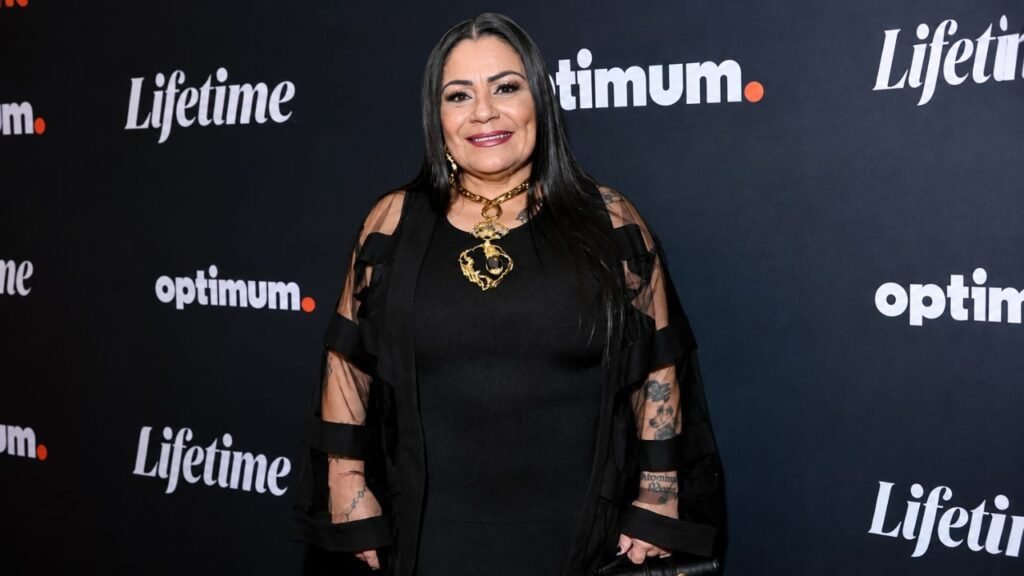
Some of the group’s best-known songs include:
- I Wonder If I Take You Home
- Can You Feel the Beat
- All Cried Out
- Head to Toe
- Lost in Emotion
- Little Jackie Wants to Be a Star
- Let the Beat Hit ‘Em
- Someone to Love Me for Me
“Someone to Love Me for Me” is particularly interesting because Lisa Lisa was involved in writing the song. This provides evidence of her creative participation beyond simply performing material written by other people. Her role as a vocalist remained central, but her involvement with songwriting added another dimension to her work. The song also reflected the more personal and emotional side of the group’s music.
Later Albums and the End of the Group
After the success of Spanish Fly, Lisa Lisa and Cult Jam continued recording. Their third album, Straight to the Sky, appeared in 1989 and included “Little Jackie Wants to Be a Star.” Although the group’s later releases did not match the extraordinary commercial impact of Spanish Fly, they continued to show a willingness to change their sound. The group remained active during a period when American dance and R&B music was changing quickly.
Their fourth studio album, Straight Outta Hell’s Kitchen, arrived in 1991. The album brought together different production approaches, including work from Full Force and C+C Music Factory’s Robert Clivillés and David Cole. “Let the Beat Hit ‘Em” became another important dance and R&B record. The song reached the top of the R&B and club charts and demonstrated that the group could still produce major records several years after its initial breakthrough.
Lisa Lisa and Cult Jam eventually separated in 1991. By that point, the group had already established a strong catalog and a recognizable place in 1980s and early 1990s music. Their separation marked the end of one stage of Lisa Velez’s career rather than the end of her work in entertainment. She soon began exploring opportunities as a solo artist.
Lisa Lisa’s Solo Career
After the breakup of Lisa Lisa and Cult Jam, Lisa Velez continued recording under the name Lisa Lisa. Her solo album LL77 was released in 1993 and represented another phase in her musical career. The project allowed her to continue working in R&B while moving away from the group format that had defined her first years of fame. She remained connected to the musical audience that had followed her since the 1980s.
One of the notable tracks from her solo period was “Skip to My Lu.” The song reached the R&B and hip-hop charts and showed that Lisa Lisa was still capable of connecting with contemporary audiences. Her solo work did not reproduce the enormous commercial impact of her biggest Cult Jam records, but it gave her the opportunity to establish an identity outside the group. It also kept her active in the music business during a period when musical trends were changing.
The transition from group vocalist to solo performer can be difficult for artists whose identity is closely connected to a successful band. Lisa Lisa managed to maintain recognition because her voice and stage name were already strongly established. Her solo career therefore became an extension of a musical identity that audiences had known for years.
Lisa Lisa’s Acting Career
Music was not Lisa Lisa’s only connection to entertainment. She also appeared in television productions, including the Nickelodeon series Taina. The show focused on a teenage girl pursuing her dreams of becoming a performer, and Lisa Lisa appeared as the character’s mother. Her involvement gave her an opportunity to bring some of her personal experience as a performer into television.
Her acting work was a natural extension of her public career. Lisa Lisa had already spent years performing in front of large audiences, appearing in music videos and working within the entertainment industry. Television allowed her to reach a different audience while maintaining her connection to music and pop culture. Although her recording career remained her defining achievement, acting added another dimension to her professional life.
Her television appearances also helped introduce Lisa Lisa to younger audiences who may not have experienced her original 1980s chart success. This became particularly relevant as her older music continued to circulate through radio, streaming and retrospectives. Her name therefore remained recognizable even as the music industry changed around her.
Lisa Lisa’s Husband and Children
Lisa Lisa has kept much of her family life away from the center of her public career. Public biographical sources identify Antonimar Mello as her husband and list two children. Unlike many modern celebrity profiles, her career has generally remained more important to her public identity than details about her private household. This makes it better to discuss her family briefly rather than filling a biography with unverified personal claims.
Her approach to privacy is also consistent with the way her career developed. Most of the available information about Lisa Lisa focuses on music, television and her experiences in the entertainment industry. Her professional achievements provide enough material for a substantial biography without speculating about her personal relationships. For a reliable article, family details should be limited to information that can be supported by established sources.
Lisa Lisa’s Health Journey and Advocacy
Another important part of Lisa Lisa’s later story is her experience as a breast cancer survivor. Her health journey became connected with awareness work and advocacy. This part of her biography adds context to the challenges she faced after becoming successful in music. It also demonstrates that her public work eventually extended beyond entertainment.
Her experience received additional attention through the Lifetime movie about her life. The film incorporates her health struggle into the wider story of her career and personal development. Rather than presenting her rise to fame as a simple success story, the production shows that her life included difficult periods away from the stage. This provides a more complete picture of the person behind the Lisa Lisa name.
Can You Feel the Beat: The Lisa Lisa Story
Lisa Lisa’s life became the subject of the Lifetime film Can You Feel the Beat: The Lisa Lisa Story, which premiered in 2025. The film dramatizes her journey from a young girl in Hell’s Kitchen to a successful singer. Jearnest Corchado portrays Lisa Lisa, while the story follows the formation of Lisa Lisa and Cult Jam and the challenges surrounding her rise to fame. Lisa Velez was also involved with the production as an executive producer.
The movie gives special attention to the early part of her career. It shows how her determination to become a singer led her to the Funhouse and eventually to the audition that changed her future. The story also examines her relationships, career pressures and health struggles. By turning her biography into a feature-length television production, Lifetime introduced her story to audiences who may have known her songs without knowing how her career began.
The biographical film also reflects Lisa Lisa’s continuing cultural relevance. A story about a singer who became famous decades earlier would not receive this treatment unless the music and the person still had a meaningful connection with audiences. The movie gives younger viewers an entry point into the history of freestyle and 1980s R&B. It also provides longtime fans with a dramatized look at a career they may have followed from the beginning.
Lisa Lisa’s Influence on Freestyle and R&B
Lisa Lisa became important because she helped bring New York freestyle into the mainstream. Her music was connected to a scene that developed in clubs and neighborhoods before gaining wider attention through radio and pop charts. She stood out as a Latina vocalist at a time when mainstream American pop did not always provide many opportunities for artists with her background. Her success helped demonstrate that Latin-influenced dance music could reach a national audience.
Her influence also extends to the visibility of Latina performers in American pop music. Later generations of artists benefited from a music industry that had become more receptive to Latina performers, and Lisa Lisa is frequently mentioned as one of the artists who helped open that path. Her success with Cult Jam showed that an artist could retain cultural identity while creating records that appealed to a broad American audience.
The lasting impact of her music can also be seen in the continued interest in her biggest songs. Tracks such as “Head to Toe” and “Lost in Emotion” remain recognizable examples of the sound associated with the late 1980s. Her music continues to appear in retrospective discussions of freestyle, R&B and New York dance music. That longevity has helped keep Lisa Lisa’s name connected with the era long after her original chart run.
Why Lisa Lisa Remains Relevant Today
Lisa Lisa’s career has lasted because her story contains more than a collection of successful songs. She represents a period when New York’s club culture, Latin identity, R&B and electronic dance music were beginning to overlap in commercially powerful ways. Her success also illustrates how a young performer could move from local ambitions to international recognition without starting inside a major recording-industry system. That journey continues to interest music fans and biography readers.
The renewed attention surrounding her life also comes from the continued popularity of 1980s music. Streaming platforms, retro radio stations and documentaries have introduced older records to younger listeners. Lisa Lisa’s songs fit naturally into that revival because they combine strong melodies with danceable production. Her recognizable voice gives the records a sound that remains identifiable even decades after their original release.
The 2025 Lifetime film added another reason for people to search for Lisa Lisa. Viewers who discovered the movie could then explore her original songs, her Cult Jam albums and the story behind her career. This has created a bridge between her original audience and a newer generation discovering her work. Her biography therefore remains relevant not only as a record of the past but as a continuing part of music history.
Lisa Lisa’s Legacy
Lisa Lisa’s legacy is closely tied to the success of Lisa Lisa and Cult Jam, but it extends beyond the group. She helped bring freestyle into mainstream pop, became a successful Latina female vocalist and continued working in entertainment after the group ended. Her catalog includes dance records, R&B songs and emotional ballads that captured several sides of the 1980s music scene. Her career also demonstrates how a performer can remain culturally relevant even after the period of greatest commercial success has passed.
Her story is particularly notable because of the contrast between her beginnings and her eventual success. She started as a young singer from Hell’s Kitchen who was searching for an opportunity while working in a clothing store. A chance meeting at the Funhouse led to an audition, and that audition eventually produced one of the most recognizable female voices in freestyle. The path was not simple, but each stage of her career contributed to the public identity that Lisa Lisa eventually built.
Today, Lisa Lisa remains associated with the songs that made her famous and with the New York music culture that shaped her early career. Her work with Cult Jam created a lasting catalog, while her solo career and television appearances expanded her professional identity. The Lifetime biopic has also ensured that her story continues reaching people who were not alive when her biggest records were first released. Her place in music history rests on both her commercial achievements and her role in bringing a distinctly New York and Latina perspective to mainstream dance and R&B music.
Frequently Asked Questions About Lisa Lisa
Who is Lisa Lisa?
Lisa Lisa is the stage name of American singer Lisa Velez. She became famous as the lead vocalist of Lisa Lisa and Cult Jam, one of the notable groups associated with the 1980s freestyle and R&B scene. Her best-known songs include “Head to Toe,” “Lost in Emotion,” “All Cried Out,” and “I Wonder If I Take You Home.” She later pursued a solo career and appeared in television productions.
What is Lisa Lisa’s real name?
Lisa Lisa’s real name is Lisa Velez. She adopted the professional name Lisa Lisa when she began her recording career with Cult Jam. The stage name became closely associated with her work throughout the 1980s and remained part of her professional identity during her later solo career.
Who were the members of Lisa Lisa and Cult Jam?
The core members of Lisa Lisa and Cult Jam were Lisa Velez, Mike Hughes and Alex “Spanador” Moseley. Lisa provided the lead vocals, while Hughes contributed drums and keyboards and Moseley played guitar and bass. Full Force was also deeply involved with the group’s songwriting and production, particularly during its early years.
What are Lisa Lisa’s biggest songs?
Some of Lisa Lisa’s best-known songs with Cult Jam include “I Wonder If I Take You Home,” “Can You Feel the Beat,” “All Cried Out,” “Head to Toe,” “Lost in Emotion,” and “Let the Beat Hit ‘Em.” “Head to Toe” and “Lost in Emotion” were particularly successful, both reaching No. 1 on the U.S. pop and R&B charts. These songs remain central to her legacy in freestyle and 1980s R&B.
Is there a movie about Lisa Lisa?
Yes. Lifetime released Can You Feel the Beat: The Lisa Lisa Story in 2025. The film dramatizes her journey from her childhood in Hell’s Kitchen to her rise as the lead singer of Lisa Lisa and Cult Jam. Jearnest Corchado portrays Lisa Lisa, and Lisa Velez was involved with the production as an executive producer.
Conclusion
Lisa Lisa’s career is a story of persistence, musical talent and timing. From singing in church and working in a clothing store to becoming the voice of Lisa Lisa and Cult Jam, she built a career that connected New York freestyle with mainstream R&B and pop. Her biggest records, including “Head to Toe,” “Lost in Emotion,” “All Cried Out” and “I Wonder If I Take You Home,” established her as one of the memorable female artists of the 1980s.
Her career did not end when Cult Jam separated. Lisa Lisa continued as a solo performer, explored television and remained connected to the entertainment industry while dealing with major personal challenges. The Lifetime biopic brought her story to a new generation and renewed attention to the music that first made her famous. For anyone interested in the history of freestyle, R&B, New York music or Latina performers in American pop, Lisa Lisa remains an important name and a compelling story.