









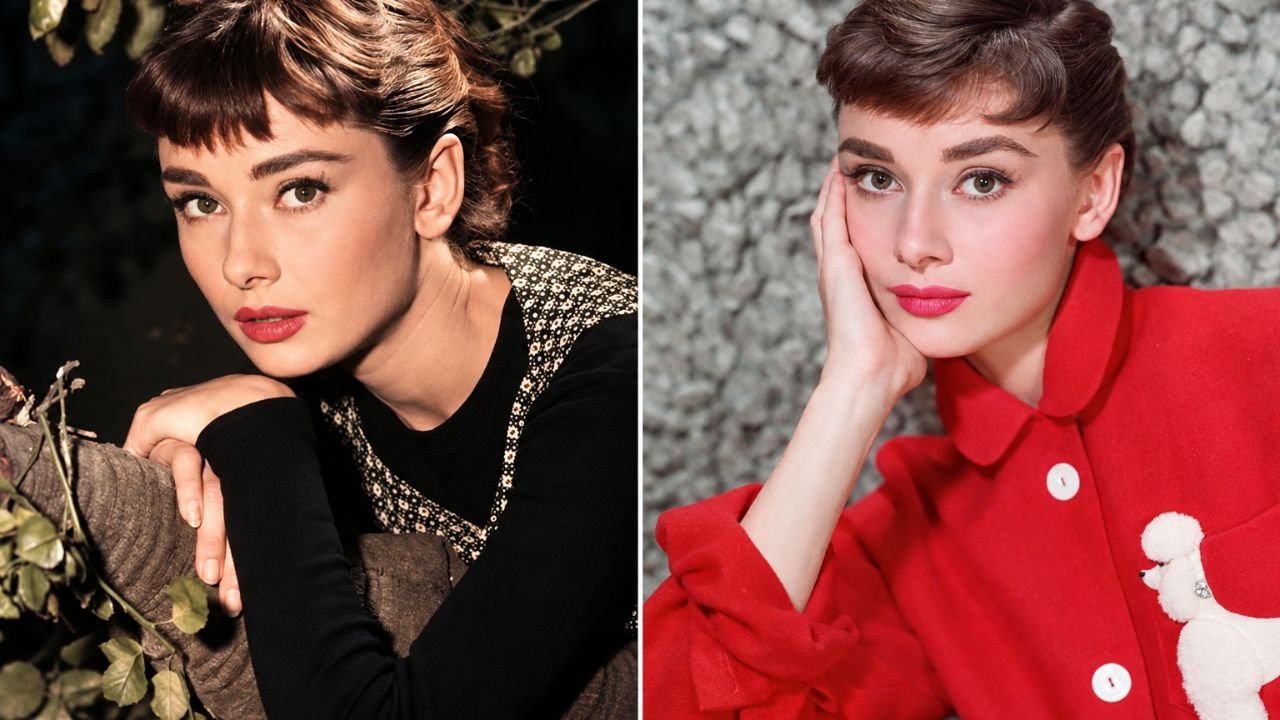
Audrey Hepburn remains one of the most recognizable figures in film history, but her story goes far beyond the elegant image associated with her classic movies. Born in Belgium in 1929, she survived the hardships of World War II in the Netherlands before becoming an actress, dancer, fashion icon, wife, mother, and humanitarian. Her performances in films such as Roman Holiday, Sabrina, Breakfast at Tiffany’s, My Fair Lady, and Charade made her one of Hollywood’s most admired stars. Later in life, she devoted much of her public work to helping children through UNICEF. Even decades after her death, Audrey Hepburn continues to attract attention because her career, personal experiences, style, and humanitarian work remain closely connected.
| Field | Details |
|---|---|
| Full Name | Audrey Kathleen Hepburn |
| Born | May 4, 1929 |
| Birthplace | Brussels, Belgium |
| Died | January 20, 1993 |
| Age at Death | 63 |
| Profession | Actress, Dancer & Humanitarian |
| Best Known For | Roman Holiday, Breakfast at Tiffany’s, Sabrina, My Fair Lady |
| Spouse(s) | Mel Ferrer, Andrea Dotti |
| Children | Sean Hepburn Ferrer, Luca Dotti |
| Known For | Acting, Fashion & UNICEF Humanitarian Work |
| Nationality | British |
| Years Active | 1948–1989 |
Audrey Hepburn’s Early Life and Family Background
Audrey Kathleen Hepburn was born on May 4, 1929, in Brussels, Belgium, to Joseph Victor Anthony Ruston and Ella van Heemstra. Her mother came from a Dutch aristocratic family, while her father worked in business and had a complicated relationship with the family. Hepburn spent part of her childhood between Belgium, England, and the Netherlands because of her parents’ circumstances. Her parents eventually separated, and her mother became the stronger influence in her upbringing.
Her childhood changed dramatically when Europe entered World War II. Hepburn and her mother were living in the Netherlands when German forces invaded the country in 1940, and the family remained there during the occupation. The experience exposed her to hunger, fear, shortages, and the realities of living under Nazi rule. Those years later influenced the way she spoke about children suffering from hunger and poverty.
Hepburn’s family background was also more complicated than the glamorous image associated with her later career suggests. Her father left the family when she was still young, and their relationship remained distant for many years. Hepburn eventually helped locate him after World War II and maintained contact with him despite the difficult history between them. The experience gave her a complicated relationship with family that was very different from the polished public image she carried as a Hollywood star.
Audrey Hepburn During World War II
World War II became one of the defining experiences of Audrey Hepburn’s childhood. While living in the Netherlands, she experienced severe food shortages as the occupation continued and eventually suffered from malnutrition and anemia. She later remembered the hunger of those years as one reason she understood the suffering of children in countries affected by poverty and war. That personal connection became particularly meaningful when she later worked with UNICEF.
There are also accounts of Hepburn helping the Dutch resistance during the occupation. As a young teenager, she performed ballet at private gatherings where money was reportedly collected for resistance activities. She was also involved in carrying messages, although accounts of the precise details vary. What is clear is that the war affected her deeply and remained an important part of the story she carried into adulthood.
Her wartime experiences also influenced her health and her original dream of becoming a professional ballerina. Years of poor nutrition affected her physical development at a crucial stage in her training. Although she continued studying ballet after the war, she eventually understood that becoming a leading professional ballerina was unlikely. That disappointment helped push her toward another career that would eventually make her famous around the world.
From Ballet to Acting
Before Audrey Hepburn became a movie star, she seriously wanted to become a dancer. After the war, she studied ballet in Amsterdam and later moved to London, where she continued her training. She worked with respected ballet teachers and also supported herself through modeling and other small jobs. Her dancing experience later proved useful in her film career because she brought a distinctive grace and physical control to the screen.
Hepburn eventually appeared in small film roles and stage productions before receiving a major opportunity in the musical Gigi. French writer Colette played an important part in that development after seeing Hepburn in Monte Carlo and recognizing that she could suit the role. Hepburn’s performance in Gigi helped establish her as a promising young actress rather than simply a dancer or model. Her stage success soon attracted the attention of Hollywood filmmakers.
Her early career shows why describing Audrey Hepburn simply as a naturally discovered movie star misses much of the story. She spent years developing skills in ballet, stage performance, modeling, and acting before her breakthrough arrived. Her combination of movement, screen presence, intelligence, and understated charm made her different from many of the actresses who were already established in Hollywood. That combination would become a major part of her identity.
Audrey Hepburn’s Breakthrough in Roman Holiday
Audrey Hepburn’s international breakthrough came with Roman Holiday in 1953. Directed by William Wyler, the movie cast her as Princess Ann, a young royal who escapes her restrictive schedule while visiting Rome. She starred opposite Gregory Peck, and their chemistry helped make the film one of the most memorable romantic comedies of its era. Hepburn’s performance transformed her from a promising young actress into a major international star.
Roman Holiday also produced one of the most important achievements of Audrey Hepburn’s career. She won the Academy Award for Best Actress for her performance as Princess Ann, along with major recognition from other film organizations. Winning such an important acting award so early in her career immediately established her as a serious performer. The film also showed that her appeal was not based solely on beauty or fashion.
The success of Roman Holiday changed the direction of Hepburn’s life. She had arrived in Hollywood as a relatively unknown European actress and quickly became one of the industry’s most talked-about young stars. Her unusual appearance, elegant manner, and ability to combine innocence with confidence made her stand out. Hollywood soon offered her increasingly important roles.
Audrey Hepburn’s Most Famous Movies
Audrey Hepburn built an impressive filmography during the 1950s and 1960s. Her movies covered romantic comedies, dramas, musicals, thrillers, and literary adaptations, allowing her to demonstrate a much wider acting range than her fashion image sometimes suggests. Several of her films became cultural landmarks long after their original releases. Her most recognizable performances include Roman Holiday, Sabrina, Funny Face, The Nun’s Story, Breakfast at Tiffany’s, Charade, My Fair Lady, and Wait Until Dark.
Some of the most important Audrey Hepburn movies include:
- Roman Holiday
- Sabrina
- War and Peace
- Funny Face
- Love in the Afternoon
- The Nun’s Story
- Breakfast at Tiffany’s
- The Children’s Hour
- Charade
- My Fair Lady
- How to Steal a Million
- Two for the Road
- Wait Until Dark
- Robin and Marian
- Bloodline
- They All Laughed
- Always
Her film choices were not limited to glamorous romantic roles. The Nun’s Story gave her an opportunity to play a serious dramatic character, while Wait Until Dark placed her in a tense thriller as a blind woman being targeted by criminals. Her work in films such as Charade and Two for the Road also showed that she could handle sophisticated comedy and complicated relationships. Looking at her career as a whole gives a much clearer picture of her abilities than focusing only on Breakfast at Tiffany’s.
Audrey Hepburn and Sabrina
Sabrina, released in 1954, was another major step in Hepburn’s career. She played Sabrina Fairchild, the daughter of a chauffeur who returns from Paris with a new sense of confidence and sophistication. The film paired her with Humphrey Bogart and William Holden, creating a romantic triangle that became one of the most memorable stories of the period. Hepburn’s performance earned her another Academy Award nomination.
Sabrina also helped strengthen the connection between Hepburn and fashion. Her character’s transformation was reflected through clothing, hairstyle, and presentation, making fashion an important part of the storytelling. Hepburn’s slim silhouette and graceful movements made even simple outfits visually distinctive. The film helped establish the idea that Audrey Hepburn’s personal style could become as influential as her acting.
Audrey Hepburn and Breakfast at Tiffany’s
Breakfast at Tiffany’s became one of the defining movies of Audrey Hepburn’s career. Released in 1961, the film featured Hepburn as Holly Golightly, a sophisticated but emotionally complicated young woman living in New York. Her performance turned Holly into one of the most recognizable characters in American cinema. The movie also permanently connected Hepburn with the fashion image that many people still associate with her.
The famous opening sequence, with Holly standing outside Tiffany & Co. in an elegant black dress, became one of the most recognizable fashion moments in film. Hepburn’s partnership with designer Hubert de Givenchy helped create the polished appearance associated with the character. Her dark sunglasses, jewelry, hairstyle, and black dress became closely linked with the film. Even people who have never watched the entire movie often recognize the visual style of Holly Golightly.
Breakfast at Tiffany’s also had an interesting history before Hepburn accepted the role. Truman Capote, whose novella inspired the movie, reportedly preferred Marilyn Monroe for Holly Golightly. The studio and filmmakers ultimately went in a different direction, and Hepburn made the role her own. Her version of Holly became so closely associated with her that it is now difficult to imagine the character without thinking of Audrey Hepburn.
Audrey Hepburn and Hubert de Givenchy
Hubert de Givenchy played a major role in shaping Audrey Hepburn’s public image. Their professional relationship began around the time of Sabrina and developed into a close friendship that lasted for decades. Givenchy designed clothing for several of her films and became strongly associated with the elegant style she represented. Their partnership helped connect Hollywood celebrity with French haute couture in a particularly memorable way.
The relationship was not simply about putting expensive clothes on a movie star. Hepburn understood how clothing could become part of a character, and Givenchy understood the proportions and simplicity that suited her. Together they created a look based on clean lines, restrained elegance, and carefully chosen details. That approach helped establish Audrey Hepburn fashion as a recognizable style rather than a passing Hollywood trend.
Hepburn’s influence can still be seen in discussions about classic fashion. The little black dress, cropped trousers, ballet flats, oversized sunglasses, simple jewelry, and understated silhouettes associated with her continue to inspire designers and fashion enthusiasts. Her style was memorable partly because it avoided excessive decoration. She showed that a simple outfit could become striking when it fit the person wearing it.
Audrey Hepburn’s Style and Fashion Legacy
Audrey Hepburn style became famous because it combined sophistication with simplicity. Unlike some stars whose fashion identities depended on dramatic gowns or elaborate accessories, Hepburn often appeared in clean, carefully fitted clothing. Her short hairstyles and delicate facial features also contributed to her distinctive appearance. She became a fashion reference point for women who wanted an elegant look without excessive ornamentation.
Her most recognizable fashion elements include:
- Little black dresses
- Cropped trousers
- Ballet flats
- Simple sleeveless dresses
- Oversized sunglasses
- Pearl jewelry
- Slim belts
- Boat-neck tops
- Neatly styled short hair
- Minimal and refined accessories
The black dress from Breakfast at Tiffany’s remains perhaps her best-known fashion image, but her influence extends far beyond that single outfit. Her wardrobe in Funny Face, Sabrina, Roman Holiday, and other films helped establish different aspects of the Audrey Hepburn look. Her clothing choices often appeared youthful without being childish and elegant without looking overly formal. That balance is one reason her fashion remains recognizable across generations.
Audrey Hepburn’s Husbands and Relationships
Audrey Hepburn’s personal life attracted considerable public interest, although she usually preferred to keep private matters away from the spotlight. She married actor Mel Ferrer in 1954, and the couple worked together professionally as well as building a family. Their marriage lasted more than a decade before they divorced in 1968. Hepburn later married Italian psychiatrist Andrea Dotti.
Hepburn had two sons, Sean Hepburn Ferrer and Luca Dotti. Sean was born during her marriage to Mel Ferrer, while Luca was born during her marriage to Andrea Dotti. Motherhood became an important part of Hepburn’s life, and she deliberately reduced her acting work during periods when she wanted to spend more time with her children. Later, she was in a long-term relationship with Dutch actor Robert Wolders.
Her family life was not always easy. Hepburn experienced miscarriages before having her children, and the pressures of fame and marriage placed additional strain on her personal relationships. She eventually found a more settled partnership with Robert Wolders, who remained close to her during the final years of her life. Looking at this part of her biography gives a more complete picture of the woman behind the public image.
Audrey Hepburn’s Children
Sean Hepburn Ferrer and Luca Dotti both became important figures in preserving their mother’s memory. Sean worked in film and later became involved in projects connected with his mother’s legacy. Luca Dotti has also spoken and written about Hepburn’s private life, helping audiences understand the person beyond her movie roles. Their memories have contributed to the continued interest in Audrey Hepburn family history.
Hepburn’s relationship with motherhood was particularly important because she had experienced an unstable childhood herself. She wanted her children to have a family environment that was more secure than the one she had known. Her decision to reduce her acting schedule was partly influenced by this desire. Fame remained part of her life, but it was not always her highest priority.
Audrey Hepburn and UNICEF
The final major chapter of Audrey Hepburn’s public life was her humanitarian work. In 1988, she became a UNICEF Goodwill Ambassador and began traveling to countries where children were affected by hunger, poverty, disease, and difficult living conditions. She visited parts of Africa, Asia, Latin America, and other regions to raise awareness of children’s needs. Her celebrity gave UNICEF an influential public voice at a time when international humanitarian campaigns were becoming increasingly visible.
Hepburn’s work with UNICEF had a personal meaning because she had experienced hunger as a child during World War II. She understood what it meant to depend on limited food supplies and live through circumstances controlled by forces outside her control. That background shaped the way she spoke about children facing similar hardships. Her humanitarian work therefore felt connected to her own life rather than being a completely separate celebrity activity.
During her UNICEF years, Hepburn traveled despite her declining health. She met children and families, spoke publicly about humanitarian crises, and used interviews and public appearances to encourage greater attention to their needs. Her work changed the way many people viewed her because she was no longer known only as a former Hollywood actress. She had become a public advocate for children around the world.
Audrey Hepburn’s Awards and Achievements
Audrey Hepburn achieved an unusually broad range of success in entertainment. She won the Academy Award for Best Actress for Roman Holiday and received additional Oscar nominations for several of her performances. She also won a Tony Award for her work in the Broadway production of Ondine. Her later television and recording work brought Emmy and Grammy recognition.
Her major achievements include:
- Academy Award for Best Actress for Roman Holiday
- Tony Award for Best Actress in a Play for Ondine
- Multiple BAFTA and Golden Globe honors
- Emmy recognition for Gardens of the World with Audrey Hepburn
- Grammy recognition for Audrey Hepburn’s Enchanted Tales
- Numerous Academy Award nominations
- International recognition for her humanitarian work
Hepburn’s EGOT status is particularly notable because it reflects achievements across film, theater, television, and music. Her Grammy came after her death, while her Emmy recognized her later television work. Taken together, these awards demonstrate that her career was not confined to Hollywood films. She succeeded in several forms of entertainment over a career that changed considerably from beginning to end.
Audrey Hepburn’s Later Career and Decision to Step Away From Hollywood
After the extraordinary success of the 1950s and 1960s, Hepburn gradually reduced her acting commitments. She wanted to spend more time with her family and had little interest in remaining constantly visible in Hollywood. Her decision was unusual because she stepped away while she was still one of the industry’s most recognizable actresses. Rather than continually accepting major roles, she became increasingly selective.
Wait Until Dark in 1967 was one of her most demanding later performances and earned her another Academy Award nomination. She subsequently appeared in fewer films, including Robin and Marian and Bloodline. Her final movie appearance came in Steven Spielberg’s Always in 1989. By that point, humanitarian work had become much more important to her than maintaining a conventional Hollywood career.
This decision helped preserve a certain mystique around Hepburn. She did not remain on screen constantly until audiences became accustomed to seeing her in lesser roles. Instead, her film appearances became relatively rare, while her classic performances remained widely remembered. Her absence from Hollywood also allowed the public image of Audrey Hepburn to become increasingly associated with elegance, charity, and timeless style.
Audrey Hepburn’s Final Years
Hepburn spent much of her final years living in Switzerland with Robert Wolders. Her health was declining, but she continued to support UNICEF and remained involved in humanitarian causes. She traveled for UNICEF during a period when she was already dealing with serious health problems. Her willingness to continue working for children despite those difficulties became an important part of her later legacy.
Audrey Hepburn died on January 20, 1993, at the age of 63. She died at her home in Switzerland after battling cancer. Her death was widely mourned because she had remained a familiar public figure even after stepping away from regular acting. The reaction also reflected the unusual combination of affection for her movies, admiration for her style, and respect for her humanitarian work.
Why Audrey Hepburn Remains Famous
Audrey Hepburn’s lasting popularity comes from several parts of her life rather than one single achievement. Her films gave audiences memorable characters, while her partnership with Givenchy helped define a new kind of Hollywood elegance. Her personal experience during World War II added a deeper dimension to her life story, and her UNICEF work showed a serious commitment to causes beyond entertainment. Few stars from her era are remembered so strongly across film, fashion, and humanitarian work.
Her influence also comes from the way her image has been passed from one generation to another. Young audiences continue to discover Roman Holiday, Breakfast at Tiffany’s, Sabrina, Funny Face, Charade, and My Fair Lady. Fashion designers continue to reference her clothing and silhouette, while biographies and documentaries keep revisiting her personal history. Her name has therefore remained part of popular culture rather than becoming limited to classic-film audiences.
There is also a contrast at the center of her legacy that makes her story particularly compelling. The public saw an elegant actress who appeared confident and composed, while her private history included war, hunger, family difficulties, professional disappointment, and personal loss. She eventually used the painful experiences of her childhood to connect with children facing similar hardship. That combination of glamour and vulnerability helped make Audrey Hepburn an unusually enduring cultural figure.
Interesting Facts About Audrey Hepburn
Several lesser-known details make Hepburn’s life story even more interesting. She was not originally planning to become one of Hollywood’s most famous actresses, and her first ambition was ballet. Her wartime experiences affected her health and contributed to the end of that dream, but they also shaped her later humanitarian work. Her career therefore developed through a series of changes rather than following a straightforward plan.
Some notable Audrey Hepburn facts include:
- She was born in Brussels in 1929.
- She spent much of World War II in the Netherlands.
- She experienced severe food shortages during the occupation.
- She trained seriously as a ballet dancer.
- She performed ballet during the war in support of resistance fundraising.
- Her Broadway breakthrough came with Gigi.
- Roman Holiday earned her the Academy Award for Best Actress.
- She worked closely with designer Hubert de Givenchy.
- She played Holly Golightly in Breakfast at Tiffany’s.
- Her singing in much of My Fair Lady was dubbed by Marni Nixon.
- She received an Oscar nomination for Wait Until Dark.
- She became a UNICEF Goodwill Ambassador in 1988.
- She continued humanitarian work during the final years of her life.
- Her final film appearance was in Always.
Audrey Hepburn’s Connection With Other Famous Figures
Hepburn’s career connected her with many major names in film, fashion, literature, and theater. Gregory Peck became her leading man in Roman Holiday, while William Wyler directed the film that made her an international star. Fred Astaire appeared opposite her in Funny Face, Cary Grant worked with her in Charade, and George Peppard starred with her in Breakfast at Tiffany’s. Her professional relationships with these people helped shape different stages of her career.
Her connection with Truman Capote is particularly interesting because his novella became the basis for Breakfast at Tiffany’s. Hubert de Givenchy had an equally important influence on her visual identity through their long professional and personal relationship. Mel Ferrer was both her husband and a fellow actor, while her sons Sean Hepburn Ferrer and Luca Dotti later became important sources of information about her private life. These connections create natural ways to explore different sides of Hepburn’s story.
Audrey Hepburn’s Legacy in Film and Fashion
Hepburn’s film legacy rests on performances that remain accessible to audiences long after the era in which they were produced. Roman Holiday still works as a romantic comedy, Breakfast at Tiffany’s remains visually distinctive, and Wait Until Dark demonstrates that she could handle suspense and dramatic intensity. Her performances were rarely built around exaggerated gestures or loud delivery. Instead, she often relied on facial expressions, movement, timing, and subtle changes in emotion.
Her fashion legacy is equally strong. Audrey Hepburn style continues to influence people who favor simple silhouettes, neutral clothing, cropped trousers, ballet flats, and understated accessories. The association with Givenchy gives her fashion story additional historical significance. She showed how an actress could become a style reference without constantly changing her appearance or following every fashion trend.
Her humanitarian legacy may ultimately be the most meaningful part of her later life. UNICEF gave her a platform to speak about children facing hunger and poverty, and her own wartime childhood gave those efforts personal weight. She used the fame she had gained through movies to draw attention to people who had far less public visibility. That shift from Hollywood celebrity to humanitarian advocate remains one of the most important parts of her story.
Frequently Asked Questions About Audrey Hepburn
1. What was Audrey Hepburn most famous for?
Audrey Hepburn was most famous for her acting career and her distinctive fashion style. Her best-known movies include Roman Holiday, Breakfast at Tiffany’s, Sabrina, Funny Face, Charade, My Fair Lady, and Wait Until Dark. She was also widely admired for her humanitarian work with UNICEF. Her influence across film, fashion, and charity made her one of the most recognizable stars of the 20th century.
2. How old was Audrey Hepburn when she died?
Audrey Hepburn was 63 years old when she died on January 20, 1993. She was born on May 4, 1929, in Brussels, Belgium. She spent her final years in Switzerland with Robert Wolders. During those years, she remained involved in UNICEF humanitarian work despite her declining health.
3. Who was Audrey Hepburn married to?
Audrey Hepburn was married twice. Her first husband was actor Mel Ferrer, whom she married in 1954, and they had a son named Sean Hepburn Ferrer. Her second husband was Italian psychiatrist Andrea Dotti, with whom she had her second son, Luca Dotti. Later in life, she had a long-term relationship with Dutch actor Robert Wolders.
4. What was Audrey Hepburn’s most famous movie?
Breakfast at Tiffany’s is often considered Audrey Hepburn’s most recognizable movie because of her portrayal of Holly Golightly and the film’s lasting fashion influence. However, Roman Holiday was arguably the most important movie for her career because it established her as a major international star and earned her an Academy Award for Best Actress. Other major films include Sabrina, My Fair Lady, Funny Face, Charade, and Wait Until Dark. Her filmography is therefore much broader than a single iconic role.
5. Why did Audrey Hepburn work for UNICEF?
Audrey Hepburn worked with UNICEF because she felt a strong personal connection to children experiencing hunger and poverty. During World War II, she had experienced severe food shortages and malnutrition while living in the occupied Netherlands. She became a UNICEF Goodwill Ambassador in 1988 and traveled internationally to advocate for children. Her humanitarian work became one of the defining parts of her final years.
Conclusion
Audrey Hepburn’s life cannot be reduced to the elegant black dress from Breakfast at Tiffany’s or the image of a graceful actress from classic Hollywood. Her journey began with ballet, passed through the hardships of World War II, and eventually led to some of the most memorable films in cinema history. She became a major fashion influence through her partnership with Hubert de Givenchy, raised two children, and later moved away from the Hollywood spotlight. Her work with UNICEF gave her public life a new purpose and connected her childhood experiences with the suffering of children around the world.
The enduring appeal of Audrey Hepburn comes from the contrast between her public image and the difficult experiences behind it. She experienced war, hunger, professional setbacks, complicated relationships, and personal loss, yet built a career remembered for grace and discipline. Her movies remain popular, her fashion continues to inspire, and her humanitarian work adds depth to a legacy that could otherwise have been defined only by celebrity. Audrey Hepburn died more than three decades ago, but her name remains firmly connected with classic cinema, timeless style, and compassion for children.