







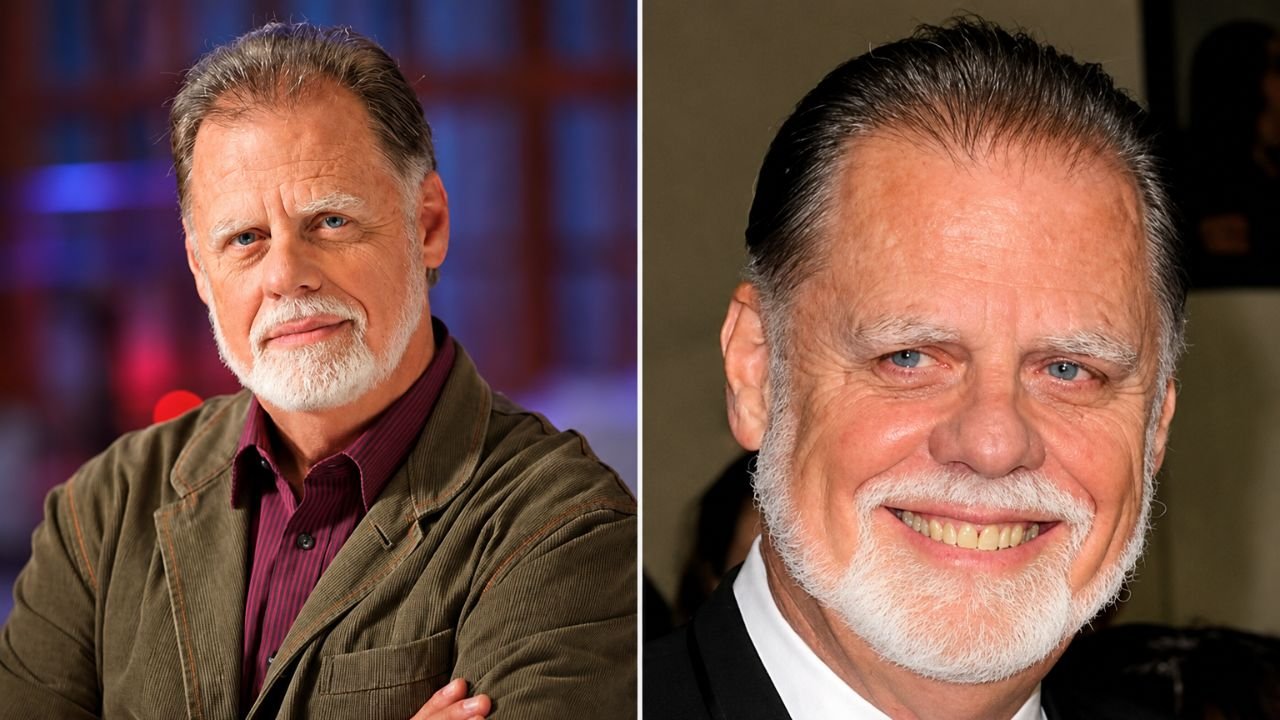
Taylor Hackford is an American director and producer whose career has covered feature films, documentaries, television, music and theatre. Born in Santa Barbara, California, he did not originally plan to work in cinema and studied international relations at the University of Southern California. His professional path changed after his experience in the Peace Corps and his work at the Los Angeles public television station KCET, where he learned filmmaking through practical experience. Over the years, Taylor Hackford became known for films such as An Officer and a Gentleman, White Nights, The Devil’s Advocate, Proof of Life and Ray, while also building a reputation for working with real-life stories and musical subjects.
His career is unusual because he developed as a filmmaker outside the traditional film-school system. Television documentaries gave him an early understanding of real people and real events, while his work with music programs introduced him to performers and live production. That background later influenced his feature films, particularly La Bamba and Ray. Away from filmmaking, he has also held an important leadership position within the Directors Guild of America and has been married to actress Helen Mirren since 1997.
Taylor Hackford Early Life and Birth Date
Taylor Edwin Hackford was born on December 31, 1944, in Santa Barbara, California. He grew up with his mother, Mary E. Taylor, who worked as a waitress, and his father, Joseph Hackford. Hackford has described his childhood as relatively blue collar, although his Santa Barbara upbringing was far removed from the Hollywood career that eventually followed. His early years gave little indication that he would later become an Oscar-winning director with an extensive filmography.
Hackford attended the University of Southern California and graduated in 1968. His studies centered on international relations and economics, and he initially considered a career connected with law, politics and international affairs. During his senior year, however, he began spending more time around film students and started thinking about movies in a different way. The experience helped change his professional direction and eventually moved him away from the legal path he had originally considered.
Taylor Hackford Birth Date and Education
The Taylor Hackford birth date is December 31, 1944, making his early academic years part of the social and cultural changes of the 1960s. His decision to study international relations rather than film is one of the more unusual elements of his biography. Instead of learning directing through a conventional cinema program, he developed his skills after college through television and independent production work. That route would eventually give him a practical background that became valuable when he moved into feature films.
His interest in cinema developed partly through exposure to major international filmmakers. Directors such as François Truffaut, Akira Kurosawa and Jean-Luc Godard influenced the way he thought about movies and storytelling. This growing interest coincided with his academic years at USC and eventually pushed him toward a completely different professional future. His story is therefore less about following a childhood dream and more about discovering filmmaking gradually.
Taylor Hackford and His Peace Corps Experience
After graduating from USC, Hackford served as a Peace Corps volunteer in Bolivia. His time there became an important turning point because he began experimenting with a Super 8 camera during his spare time. The camera gave him a way to explore images and storytelling while he was still far from the American film industry. What began as an experiment eventually contributed to his decision to pursue filmmaking professionally.
The Peace Corps experience also gave Hackford a connection to Latin American culture that would later influence his work. Years afterward, he became involved with La Bamba, the story of Mexican-American rock musician Ritchie Valens. His familiarity with Latin American culture helped give the project personal relevance rather than making it simply another Hollywood production. The connection between his early life and later work is one of the most interesting threads in his career.
How Taylor Hackford Started Filmmaking
After returning to the United States, Hackford decided against pursuing the legal career he had once considered. He found a position at KCET, the Los Angeles public television station, beginning in the mailroom. Instead of remaining in an administrative role, he gradually moved into production and began working on documentaries, cultural programs, investigative projects and music performances. KCET effectively became his practical filmmaking education.
His television experience was important because it introduced him to many different forms of storytelling. He learned how to work with real people, performers and documentary subjects while dealing with the limitations and demands of television production. His work also brought him into contact with musicians and live performances, an experience that would later become important to his movie career. By the time he moved toward feature films, he already had years of practical experience behind the camera.
KCET and His Early Television Work
Hackford’s early television career included work connected to music and cultural programming. He became involved with productions featuring performers and musical artists, which gave him an unusual combination of documentary and entertainment experience. He also worked on material connected to writer Charles Bukowski and other cultural subjects. These projects helped establish the realistic approach that would later appear in his dramatic films.
This period also helped explain why music became such a recurring subject throughout his career. Hackford later directed music videos and worked on films centered around musicians and performers. His understanding of performance was not limited to acting because he had spent years observing musicians in television production environments. The result was a career in which music frequently became part of the storytelling itself.
Teenage Father and Taylor Hackford’s First Oscar
Taylor Hackford’s first major filmmaking breakthrough came with Teenage Father. The short film earned him the Academy Award for Best Live Action Short Film in 1979. Winning an Oscar before directing a major feature established him as a filmmaker worth watching and helped open the way toward larger productions. The achievement was particularly notable because his career had developed through television and practical experience rather than through the traditional Hollywood route.
Teenage Father also demonstrated Hackford’s interest in stories based on ordinary people facing difficult personal circumstances. The project dealt with teenage parenthood and the responsibilities that came with it. Rather than relying on spectacle, the film focused on human behavior and emotional consequences. That interest in character-driven storytelling would remain visible throughout much of his later work.
The Idolmaker and His Move Into Feature Films
The Idolmaker became Taylor Hackford’s feature directing debut in 1980. The film focused on the music industry and starred Ray Sharkey and Peter Gallagher. Its subject was particularly appropriate for Hackford because music and performers had already been a major part of his television career. Moving from a short film into a full-length production also demonstrated that he was ready to handle larger casts, sets and storytelling structures.
The film was only the beginning of a long feature career. Hackford did not stay within the music genre after The Idolmaker, instead moving into romance, drama, action, crime and psychological stories. His willingness to change subjects became one of the defining features of his filmography. Within two years, he would direct the movie that established him as a major Hollywood filmmaker.
An Officer and a Gentleman
An Officer and a Gentleman arrived in 1982 and became one of the biggest early successes of Taylor Hackford’s career. The film starred Richard Gere and Debra Winger and followed a young man’s difficult journey through military officer training. It combined romance, discipline, personal ambition and emotional conflict, giving Hackford an opportunity to work with several different dramatic elements at once.
The movie received major awards recognition and became a commercial success. Louis Gossett Jr. won the Academy Award for Best Supporting Actor, while the song “Up Where We Belong” also received an Oscar. Debra Winger earned a nomination for Best Actress, and Hackford received significant directing recognition. The success proved that he could handle a large Hollywood production while still maintaining an emphasis on character and performance.
Taylor Hackford Movies During the 1980s
After An Officer and a Gentleman, Hackford continued developing a varied collection of Taylor Hackford movies. His projects included Against All Odds, White Nights and Everybody’s All-American. Each movie explored a different environment, allowing him to work with romance, sport, dance, music and personal drama. Rather than repeating the formula of his earlier success, he continued searching for new subjects.
White Nights became especially significant for his personal life because it was during the production that he met Helen Mirren. The movie also gave him another opportunity to combine drama with performance and dance. His interest in music and performers remained visible throughout the production. These years established Hackford as a director who could move comfortably between mainstream entertainment and stories built around individual performers.
Some notable Taylor Hackford movies and productions include:
- The Idolmaker
- An Officer and a Gentleman
- Against All Odds
- White Nights
- Everybody’s All-American
- Blood In, Blood Out
- Dolores Claiborne
- The Devil’s Advocate
- Proof of Life
- Ray
- Love Ranch
- Parker
- The Comedian
La Bamba and His Connection to Music
La Bamba became one of the most important music-related projects associated with Taylor Hackford. The 1987 film tells the story of Ritchie Valens, the young musician whose life ended in the 1959 plane crash that also killed Buddy Holly and J. P. Richardson. Hackford was involved with the project as a producer and helped bring the story of the Mexican-American musician to a broad audience.
The movie also connected directly with Hackford’s earlier experiences. His time in Bolivia had given him an appreciation for Latin American culture, while his television work had already established his interest in music. La Bamba allowed him to combine those interests with a dramatic story about family, identity and ambition. It became one of the most recognizable projects from his career during the 1980s.
Blood In, Blood Out and Dolores Claiborne
Hackford continued exploring different cultural and dramatic settings with Blood In, Blood Out, also known as Bound by Honor. The film focused on Mexican-American characters and life in East Los Angeles. Its subject matter continued his interest in Latino culture and communities that had not always received central attention in mainstream American cinema. Hackford received a Best Director award at the Tokyo Film Festival for the film.
He later directed Dolores Claiborne, based on the novel by Stephen King. The film starred Kathy Bates and Jennifer Jason Leigh and moved Hackford into darker psychological territory. The story was very different from his earlier work with musicians and military characters. This change once again demonstrated his willingness to explore different genres rather than becoming associated with only one type of movie.
When We Were Kings and Documentary Filmmaking
Documentary filmmaking remained an important part of Hackford’s professional life even after he became established in Hollywood. One of his best-known documentary projects was When We Were Kings, which focused on the famous 1974 boxing match between Muhammad Ali and George Foreman in Zaire. Hackford became involved with existing footage and additional interviews, helping shape the material into a finished documentary.
When We Were Kings eventually won the Academy Award for Best Documentary Feature. The project was another example of Hackford’s ability to work with real historical figures and events. His documentary experience had begun during his television years and continued throughout his film career. It also helped explain why his dramatic movies often have a strong sense of realism.
The Devil’s Advocate and Proof of Life
The Devil’s Advocate gave Taylor Hackford an opportunity to work in supernatural thriller territory. Starring Al Pacino and Keanu Reeves, the film followed a successful young lawyer whose professional ambitions lead him into an increasingly disturbing world. The project was very different from Hackford’s music-centered films and showed his ability to work with large-scale commercial entertainment.
Proof of Life followed in 2000 and starred Russell Crowe and Meg Ryan. The movie combined action, romance and international suspense around a kidnapping and negotiation story. Hackford again demonstrated that he could move between genres without becoming tied to a particular filmmaking formula. His filmography by this point had already included romance, military drama, biography, crime, psychological drama and thriller material.
Taylor Hackford and Ray
Ray became one of the defining achievements of Taylor Hackford’s career. The director spent many years attempting to bring a feature film about musician Ray Charles to the screen. The long development process reflected his commitment to the project and his desire to tell the musician’s story properly. When the movie finally arrived in 2004, it became a major critical and awards success.
Jamie Foxx portrayed Ray Charles and delivered the performance that became one of the most celebrated aspects of the film. Ray received six Academy Award nominations, while Foxx won the Oscar for Best Actor. Hackford received Academy Award nominations for Best Director and Best Picture, giving him recognition in two of the most important categories. The film combined many of the interests that had shaped his career, including music, biography, performance and documentary-style realism.
How Ray Reflected Hackford’s Directing Approach
Ray was not simply a collection of important events from Ray Charles’s life. Hackford used changes in visual style and camera movement to reflect the character’s experiences and emotional state. The movie also placed strong emphasis on Charles’s relationships, memories, career struggles and personal problems. These choices helped turn a conventional musical biography into a more personal character study.
The film also benefited from Hackford’s longstanding understanding of musical performance. He had spent years working with musicians before making Ray, so the concert and recording scenes were not unfamiliar territory. His experience allowed the performances to function as important dramatic moments rather than simple interruptions between plot developments. Ray therefore brought together several strands of his career in one project.
Taylor Hackford and Music
Music has been one of the most consistent elements in Hackford’s professional life. His early television work involved musical performances, while his later movies included La Bamba and Ray. He also directed music videos for artists such as Lionel Richie and Phil Collins. His work demonstrates an understanding of how music can reveal personality and advance a story.
His interest in music also extended to documentary filmmaking. He directed Chuck Berry: Hail! Hail! Rock ‘n’ Roll, another project that placed a major musician at the center of the story. His ability to move between documentary, concert footage and scripted drama gave him a distinctive connection with musical subjects. This is one reason his career is particularly interesting to fans of both cinema and music history.
Taylor Hackford and the Directors Guild of America
Hackford’s influence has extended beyond the movies he directed. He became involved with the Directors Guild of America and eventually took on major leadership responsibilities within the organization. He served on the Western Directors Council, joined the National Board and later became Third Vice President. In 2009, he was elected president of the Directors Guild.
His involvement with the guild gave him an additional role in the American film industry. Instead of concentrating only on his own productions, he became involved in broader professional issues affecting directors. He served two terms as president and was recognized with the Robert B. Aldrich Award for his service. His guild career is therefore an important part of his biography rather than a minor footnote.
Taylor Hackford Theatre Work
Although film remains the central part of his career, Hackford has also worked in theatre. One notable production was Louis & Keely: Live at the Sahara, where he worked as director and playwright. The production focused on the musical partnership between Louis Prima and Keely Smith. Its subject once again connected Hackford with the world of music and performers.
The theatre project showed that his creative interests were not restricted to cameras and movie sets. Theatre required him to approach performance in a different way, with live actors and audiences rather than editing and filmmaking techniques. The experience added another dimension to a career that already included movies, documentaries, television and music videos. It also reflected his continued interest in stories about performers.
Taylor Hackford Spouse Helen Mirren
Taylor Hackford’s spouse is actress Helen Mirren. The couple met while working on White Nights, with Hackford directing the film and Mirren appearing as one of its performers. Their professional relationship eventually became a personal relationship, and they married on December 31, 1997, in Scotland. Their marriage has continued for nearly three decades.
Hackford and Mirren have both maintained independent careers throughout their relationship. Mirren has become one of Britain’s most internationally recognized actresses, while Hackford has continued his work as a director and producer. They have also worked together professionally again, most notably on Love Ranch. Their relationship is therefore connected to their careers but does not define either person’s professional identity.
Taylor Hackford Family and Children
Taylor Hackford has two sons from his previous marriages. His older son, Rio Hackford, became an actor and appeared in films and television productions during his career. Rio worked on projects including Treme, American Crime Story, The Mandalorian and other productions before his death in 2022. His career created another connection between the Hackford family and the entertainment industry.
Hackford’s younger son is Alexander Hackford, who was born in 1979 during his marriage to filmmaker Lynne Littman. Taylor Hackford and Helen Mirren do not have biological children together. When Hackford married Mirren in 1997, his sons were already part of his family history from his earlier marriages.
Taylor Hackford’s Marriages
Before marrying Helen Mirren, Hackford was married twice. His first marriage was to Georgie Lowres, whom he married in 1967, and they had a son, Rio. The marriage ended in divorce in 1972. Hackford later married filmmaker Lynne Littman in 1977, and they had Alexander before their marriage ended in 1987.
His third marriage was to Helen Mirren in 1997. The relationship has lasted much longer than his previous marriages and has remained a notable Hollywood partnership. Hackford and Mirren have generally maintained their own professional identities while supporting each other’s careers. Their long relationship has become one of the most recognizable director-actress marriages in the entertainment industry.
Taylor Hackford Net Worth
The exact Taylor Hackford net worth is not publicly established through reliable financial records. Various celebrity websites publish estimates, but these figures can differ substantially and some may combine his finances with those of Helen Mirren. Because private earnings, investments, property holdings and contracts are not completely public, a precise personal figure should not be presented as confirmed.
Hackford’s long career has provided several potential sources of income. His work has included directing, producing, documentaries, television, music videos and theatre, while several of his films achieved significant commercial success. His career also spans more than five decades, giving him a long professional history in the entertainment business. It is more accurate to discuss his financial success through these career achievements than to present an unsupported exact number.
Major Taylor Hackford Career Achievements
Several achievements stand out when looking at the complete career of Taylor Hackford:
- Academy Award winner for Teenage Father
- Academy Award-nominated director of Ray
- Academy Award-nominated producer of Ray
- Director of An Officer and a Gentleman
- Producer of La Bamba
- Director of White Nights
- Director of The Devil’s Advocate
- Director of Proof of Life
- Contributor to the Oscar-winning When We Were Kings
- Director of Chuck Berry: Hail! Hail! Rock ‘n’ Roll
- Music-video director for major recording artists
- Former president of the Directors Guild of America
- Recipient of the DGA Robert B. Aldrich Award
- Recipient of a Lifetime Achievement Award in Directing from the San Francisco International Film Festival
These achievements show why his career cannot be summarized by one successful movie. Hackford has moved through television, short films, feature films, documentaries, music videos and theatre while also becoming involved in professional leadership. His ability to work with real-life subjects has been one of the strongest recurring characteristics of his career.
What Makes Taylor Hackford’s Career Different?
One of the most distinctive aspects of Hackford’s career is the absence of a traditional filmmaking path. He began with international relations, spent time in the Peace Corps and entered public television before becoming a feature director. His early work with documentaries and music programs gave him practical skills that later influenced his approach to dramatic filmmaking. Instead of developing through a conventional film-school route, he built his career project by project.
His filmography also shows a strong interest in people whose lives contain ambition, pressure and personal conflict. Ritchie Valens, Ray Charles, military recruits, musicians, criminals and other characters have all appeared in his work. Even when the genres changed, he often remained interested in individuals whose personal lives were shaped by professional ambition. That focus helped give his movies a consistent human element despite their very different subjects.
Conclusion
Taylor Hackford has built one of the more varied directing careers in American cinema. His journey began with international relations studies at USC, continued through the Peace Corps and public television, and eventually led to an Oscar-winning short film and a long feature-film career. Movies such as An Officer and a Gentleman, White Nights, The Devil’s Advocate and Ray established his reputation, while La Bamba, When We Were Kings and his music-related projects showed his continuing interest in real people and performers.
His career also extends beyond directing. Hackford has worked as a producer, documentary filmmaker, music-video director and theatre creative, while his leadership within the Directors Guild of America gave him an important role in the wider film industry. His marriage to Helen Mirren is another well-known part of his personal life, but his professional achievements stand independently on their own. From his unconventional beginnings to his decades of work in film and television, Taylor Hackford remains a filmmaker whose career is defined by variety, persistence and a lasting interest in stories based on real human experiences.
Frequently Asked Questions About Taylor Hackford
Who is Taylor Hackford?
Taylor Hackford is an American film director and producer known for movies including An Officer and a Gentleman, White Nights, The Devil’s Advocate, Proof of Life and Ray. He has also worked on documentaries, music projects and theatre productions.
When is Taylor Hackford’s birth date?
Taylor Hackford was born on December 31, 1944, in Santa Barbara, California. He later attended the University of Southern California, where he studied international relations and economics.
What are the most famous Taylor Hackford movies?
Some of the best-known Taylor Hackford movies include An Officer and a Gentleman, Against All Odds, White Nights, La Bamba, Blood In, Blood Out, Dolores Claiborne, The Devil’s Advocate, Proof of Life and Ray.
Who is Taylor Hackford’s spouse?
Taylor Hackford’s spouse is actress Helen Mirren. They met while working on White Nights and married in Scotland on December 31, 1997. They have also worked together professionally on Love Ranch.
What did Taylor Hackford win an Oscar for?
Taylor Hackford won the Academy Award for Best Live Action Short Film for Teenage Father in 1979. He later received Academy Award nominations for Best Director and Best Picture for Ray.